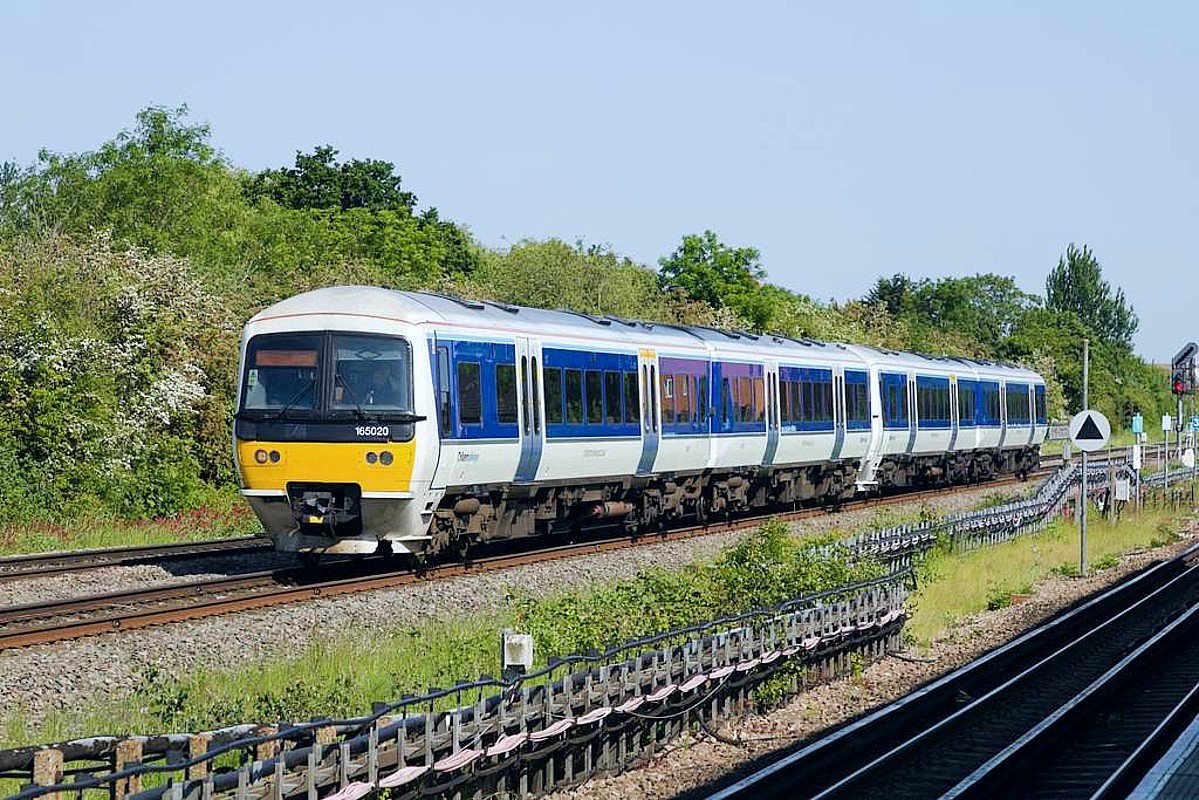
The government has confirmed a further £2.5 billion in funding for East West Rail (EWR), the major infrastructure project to establish a railway link between Oxford and Cambridge. Chancellor Rachel Reeves announced the investment in her first spending review statement to Parliament yesterday, signalling renewed momentum behind the long-delayed scheme.
Speaking in the House of Commons on Wednesday (June 11), Reeves said:
“I have heard representations from my honourable friends from Milton Keynes North, Milton Keynes Central and Buckingham and Bletchley, and I can tell the House today to connect Oxford and Cambridge and to back Milton Keynes’ leading tech sector I am providing a further £2.5 billion for the continued delivery of East West Rail.”
The funding is part of a broader vision to develop the so-called Oxford-Cambridge Growth Corridor – a region already home to two world-class universities and a growing concentration of science and technology firms. A government policy paper released alongside the Chancellor’s speech described a “renewed focus” on driving growth in the area. It also confirmed that EWR remains central to that ambition, supporting not only economic development but also enabling large-scale housing growth.
A strategic investment in jobs, housing and connectivity
Reeves reiterated the government’s commitment to creating 1.5 million new homes and emphasised that new transport links like EWR would help unlock sites for housing and employment along the route. The railway is also expected to ease pressure on roads, connect communities more effectively and stimulate local economies by making areas more attractive for investment and business start-ups.
What is East West Rail?
First conceived more than 20 years ago, the EWR project aims to establish a direct rail link between Oxford and Cambridge. The full scheme is expected to cost at least £5 billion and includes both upgrades to existing infrastructure and construction of new lines.
The project is divided into four key segments:
- Upgrading the rail between Oxford and Bicester (completed in 2016).
- Restoring a disused line between Bicester and Bletchley (opening later this year).
- Refurbishing the existing route from Bletchley to Bedford (to be completed by 2030).
- Building a brand new stretch of railway from Bedford to Cambridge (still in planning stage).
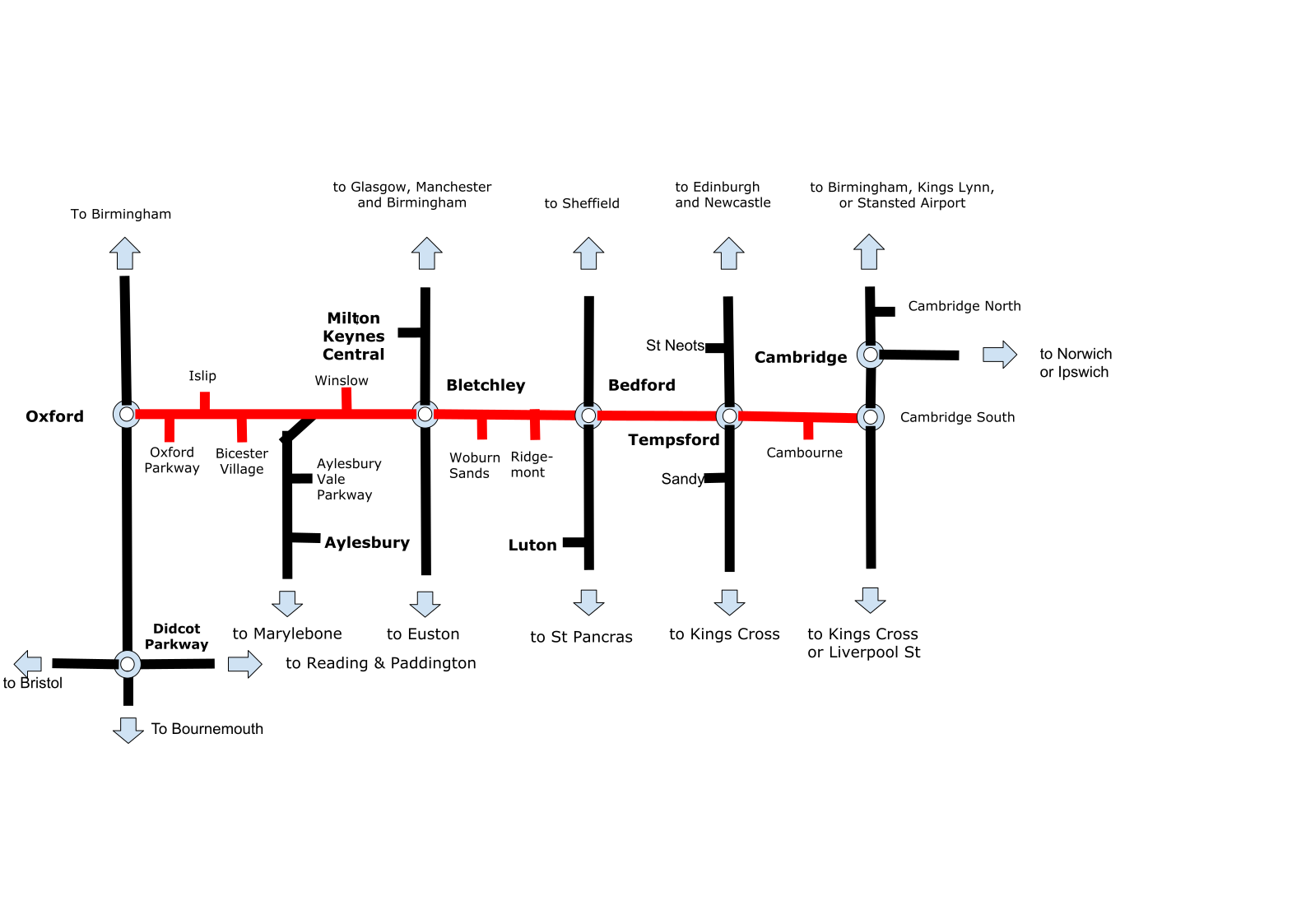
As the diagram below shows, the line, once completed, will make it possible to travel from Oxford or Cambridge to most of the north of England without having to go through London.

The Bedford–Cambridge section, the most ambitious part of the scheme, includes two new stations at Cambourne and Tempsford. Trains will enter Cambridge from the south and a new East Coast Mainline station at Tempsford will serve as a key interchange. The station, originally scheduled for later development, will now be accelerated by three to five years.

The development at Tempsford is also linked to one of the government’s most radical housing proposals: the creation of a new town that could eventually house up to 350,000 people. This would make it larger than either Cambridge or Oxford and place it at the heart of the growth corridor’s ambitions.
A revival of the Oxford-Cambridge Arc
The EWR line forms the backbone of the Oxford-Cambridge Arc, a wider strategy for regional growth originally launched in 2003 but shelved by the previous Conservative government in 2021. Reeves made clear that the new administration is determined to press ahead.
“Only 66 miles apart, these cities are home to two of the best universities in the world and the area is a hub for globally renowned science and technology firms,” Reeves said in a separate speech in Oxfordshire earlier this year. “This area has the potential to be Europe’s Silicon Valley.”
Sir Patrick Vallance, former Chief Scientific Adviser, has been appointed as the new “Oxford-Cambridge Growth Corridor Champion” to provide strategic leadership.
“The UK has all the ingredients to replicate the success of Silicon Valley or the Boston Cluster but for too long has been constrained by short termism and a lack of direction,” Vallance said. “Together we will build the infrastructure and partnerships needed to join up this region’s academia, investors and business.”
A mixed local reception
While the EWR project is expected to bring economic benefits, it has also drawn criticism from communities along its proposed route. In Bedford, the redevelopment of rail infrastructure means dozens of homes are at risk of compulsory purchase or demolition. Though the number of affected properties has been reduced – from 97 to 37 near the town’s main station, plus 28 gardens – concerns remain.
Bedford St Johns station is set to be relocated closer to Bedford Hospital, as the current location cannot support the new service levels. EWR has pledged to continue working to reduce the scheme’s impact and has launched a support programme for homeowners affected by the changes.
William Harrold, member and founder of the Cambridge Approaches thinktank said: “Michael Gove dumped this project in 2022 for a good reason. Diverse low density Arcs produce negligible agglomeration. Only cities do that, and the railway would have a huge problem attracting passengers to use it.”
A long road ahead
After years of delays, and despite fierce local opposition, the East West Rail project appears to be back on track with significant political support and a clear funding commitment. If successful, the line could become a transformative link in the UK’s transport network – opening up opportunities for housing, jobs and innovation in one of the country’s most dynamic regions.
However, as communities along the route are already experiencing, the price of progress will not be borne equally. The government’s challenge now is to deliver this ambitious vision while addressing the legitimate concerns of those in its path.
This article is from a number of articles by the Local Democracy Reporting Service, compiled by ChatGPT and edited by East Anglia Bylines.