


“Good god, that’s done it! He’s lost us the tarts’ vote!”
This astute psephological observation was from the Duke of Devonshire, on hearing of prime minister Stanley Baldwin’s famous claim that the press barons enjoyed “power without responsibility, the prerogative of the harlot through the ages”.
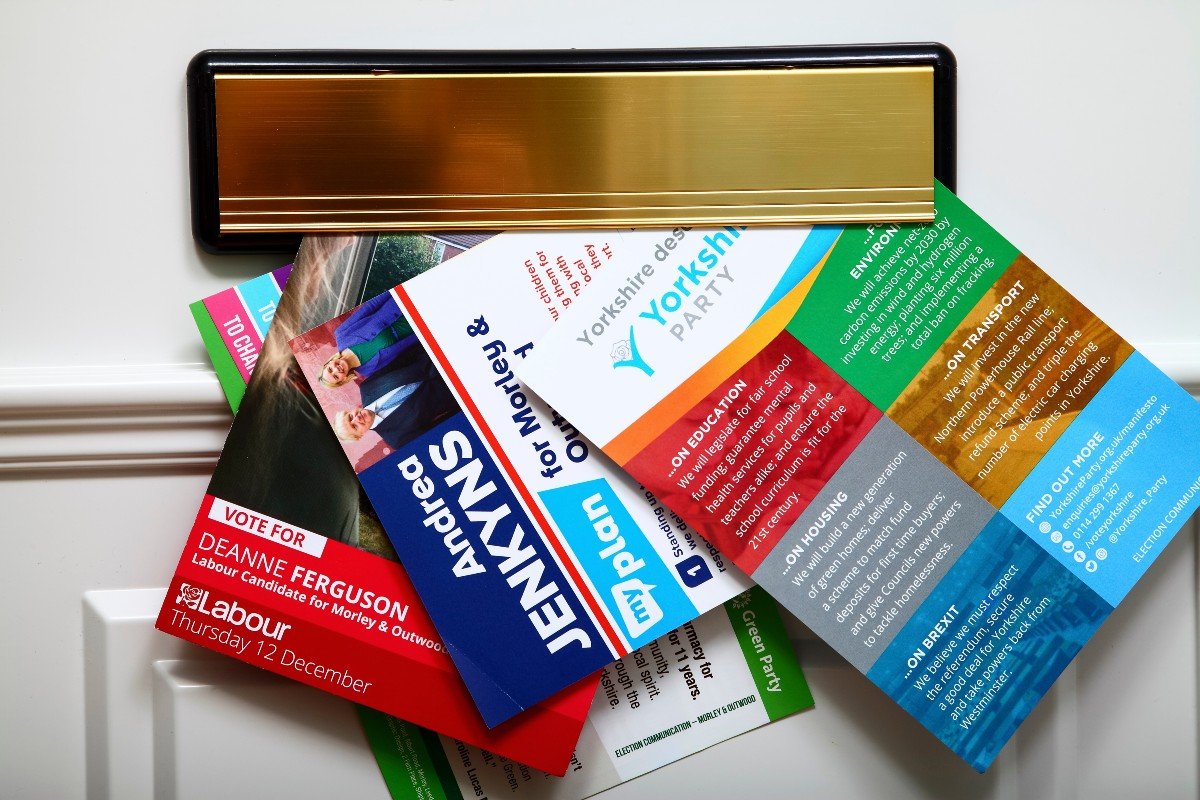
It is an example of how careless talk can cost votes. So the election leaflet is supposed to set out the sacred text on which candidates are to be judged. It is said by the old pros that the lifespan of a party political leaflet is the few seconds from the front doormat to the waste bin; but with social media, TV advertising and the rest, they still they put money and their ingenuity into that old standby.


So the least we can do is add a little value of our own. A lot of thought has been put into that insignificant piece of paper. Its intention is to inform the voter, but also for the whole to be much more than the sum of its parts. If it works, then the reader will discard believing he or she has learned much more than the leaflet actually says.
You decide what the election should be about, not them
Our understanding of the party promotion should begin before the election leaflets drop though the letterbox. If we wait to hear what the parties are telling us, then we are allowing them to dictate how we see the election. It is usual when we go into a shop, after all, to have an idea what we want to buy. We don’t usually spend our money on what the shop most wants to sell us. Likewise, a democracy should start from the bottom up, so by the time you begin receiving those leaflets, you ought to know what it is you’re voting about: don’t let the parties tell you.
So, if the election is for a county council, its main responsibilities are social care and health, highways and transport, education, waste management and the environment, and public safety. If the leaflet talks about something else, it is trying to lead you into subjects the party would prefer. You can make your own judgement on why.
Never trust a local election leaflet focused on national issues
Of those subjects, you may well have strong views about one or two of them, so they will be what you want to concentrate on. How does the leaflet deal with them? This is a local election, so what relevance is it for the leaflet to try to talk about national issues?

At first glance, it is reasonable to think its purpose would be to make clear on whose behalf it is making an argument, but these days that isn’t always clear. The candidate’s name will be there, yes, but how about the party? Sometimes, when the party is tanking in the polls, the name is hidden away; it might even not appear at all. Hardly a reason to trust what it says.
Why are some Tories ashamed of their national party?

Perhaps worse, the leaflet tries to give the impression it is from another (more popular) party. The Conservatives have used this technique widely, pretending from the colour used, to be the Greens. In this election, there have already been Tory leaflets printed in Reform’s turquoise.
Sometimes Conservative candidates choose another option. They became so unpopular, recently some of the party’s candidates have opted to call themselves ‘Local Conservatives’, presumably to distinguish themselves what is happening nationally. In these Suffolk County Council elections, more than half the party’s candidates have chosen this course: they are standing not as Conservatives but as Local Conservatives. You judge why.
Beware the weasel words
Now how is the leaflet set out? What is the headline, if it has one? That is what the party wants you to concentrate on. Does it have bullet points? How do they match your preferences?
Whatever the wording of the leaflet, somebody has spent time choosing just the right words to convey what the party wants you to understand from the presentation… though that might differ from what it actually says. So look for the weasel words. ‘Should’, ‘could’ and ‘may’ have been chosen specifically for you to read as ‘will’, but don’t be fooled. And the more weasel words there are, the more the party is trying to mislead you.
Look for quotes taken out of context: are they trying to bend your perception in an unjustified direction? Likewise pictures. Are they relevant, and what impression does the party hope you will take from them?
Don’t vote with the mob
Then there are the notorious bar charts. They have often been outrageously misleading – like, completely omitting one party from the chart. The chart is often accompanied by the phrase: ‘Only Liberal Democrats can win here!’ The LibDems introduced this scandalous attempt at hoodwinking, and everybody else was outraged. Then, realising it worked, everybody else followed suit.

Beware those presentations which try to sweep you up in some idea that this or that party has the momentum, and if you want to ‘belong’ then you should vote the same way. Readers might not expect East Anglia Bylines to support Reform, and you would be right. But when Reform’s leaflet shows a back view of a messianic looking Nigel Farage apparently addressing a vast crowd of the adoring faithful, what do you think it is trying to say?
Is it factually explaining why you should put your trust in Reform? Or perhaps it is telling you that lots of other people will vote for Nigel Farage, so if you don’t want to be left behind then you should too.
Don’t forget, these elections are about you, the voter, not the parties. Make sure they know that.
More from East Anglia Bylines


Bylines Network Gazette is out!
The latest Bylines Network Gazette is out now. Become a Friend of Bylines Network or upgrade to a paid Substack subscription, and you will get access to a vital collection of citizen articles and stories.
Journalism by the people, for the people.



