• Contact
  • About
  • ISSN 3049-9771
  • Authors and editors
NEWSLETTER SIGN UP
East Anglia Bylines
Advertisement
  • HOME
  • News
    • Brexit
    • Health
    • Education
    • World
  • Politics
    • Local government
    • Justice
    • Activism
  • Climate
    • Environment
  • Lifestyle
    • Community
    • Culture
    • History
    • Humour
    • Property
  • Business
    • Development
    • Economics
    • Finance
    • Transport
    • Farming
  • ANGLIA
    • Bedfordshire
    • Cambridgeshire
    • Essex
    • Hertfordshire
    • Norfolk
    • Suffolk
  • Series
No Result
View All Result
East Anglia Bylines
Home Democracy

The truth about an archaic tradition Labour wants to abolish

For centuries, Parliament has had ‘noblemen’ sitting in the House of Lords, solely due to their ancestral lineage – but their days are numbered

Jenny Rhodes by Jenny Rhodes
14 November 2024
in Democracy, History
Reading Time: 8 mins read
A A
A number of peers in full regalia, in the House of Lords

Image by House of Lords via Flickr (CC BY-NC-ND 2.0)

Share on Bluesky

The Labour government has announced plans to remove the remaining hereditary peers from the House of Lords, fulfilling a manifesto commitment. The proposed legislation aims to abolish the right of hereditary peers to sit in the upper chamber, a move they believe will bring the upper house into the 21st century.

The government’s manifesto said they would introduce “legislation to remove the right of hereditary peers to sit and vote in the House of Lords.” 

They have been true to their word – the Bill has already passed its first and second readings, and reaches its third reading in the Commons on 12 November. It will then be debated in the House of Lords, which promises to be interesting. In 1998, when the abolition of hereditary peers was last considered, some saw it as ‘turkeys voting for Christmas’. One unhappy lord said he would be “stamping [his] foot, throwing stones, making the government’s life absolutely beastly”.

An exception

Most democratic countries have two chambers – the ‘upper’ and ‘lower’ houses. As a rule, legislators are elected by the public. An exception is the UK: the only country whose upper house is a non-territorial representative body.

The Lords is huge – over 800 peers sit in the House. There are currently 657 life peers, appointed by the monarch ‘on the advice of the Prime Minister’. Of the rest, 26 are bishops and 92 are hereditary peers.

What is the history?

Oliver Cromwell dissolving the Long Parliament.
Oliver Cromwell disbanding the Long Parliament. Image by Amsterdam Museum via Wikimedia Commons (CC0)

1660: After a brief fling with Oliver Cromwell’s republicanism from 1649-60, Parliament was re-established, with the Lords populated by hereditary peers. When a lord died, his eldest son would inherit his title and sit in the Lords as a legislator. For 300 years, this remained unchanged.

1958: The Life Peerages Act enabled life peerages to be bestowed on both men and women, with ‘appointments’ based on merit and experience. So we’ve had life peers and female peers for only 66 years. The first woman to be created a life peer was Baroness Wootton, elected for her expertise in criminology and penal reform.

1997: Tony Blair’s manifesto promised to abolish hereditary peers, but when it came to passing the House of Lords Act 1999, some Lords failed to support the move. A compromise was reached that allowed 92 to remain for a ‘temporary’ period. So this is 25-year-old unfinished business. 

Hundreds were removed in 1999, but since then the total number has crept up again. The remaining hereditary peers are all white men, mostly over the age of 70.

Inheritance and gender imbalance

Hereditary peers are there by virtue of succeeding into their father’s title. Since 1999, when one of the 92 dies or retires, the remaining hereditary peers vote on a successor. Currently there are only 88, as no elections have taken place this year.

Most (78) are Conservative or crossbench; a few are Labour or Liberal Democrat. There are currently no females – indeed, there have been very few since 1999. The Countess of Mar, the last female hereditary peer, retired in May 2020. The fact that there are so few women skews gender balance in the Lords, which is still 70% male.

It is notable that the House of Lords Appointments Commission (HOLAC) does not scrutinise hereditary peers for propriety.

Who do they represent?

Peers don’t represent a geographical area. Some are named after a place but have little connection with it. The Duke of Norfolk lives in Arundel, Sussex. He happens to be Earl Marshal, the UK’s highest hereditary position after the royals. He is one of two special noblemen who may be exempt from the abolition of hereditary peers, as his role includes organising constitutional ceremonies such as coronations and royal funerals.

Viscount Stansgate, one of two Labour hereditaries, is named after a village in Essex that has been home to the Benn family for generations. Yes, that Benn – he’s Tony Benn’s son. 

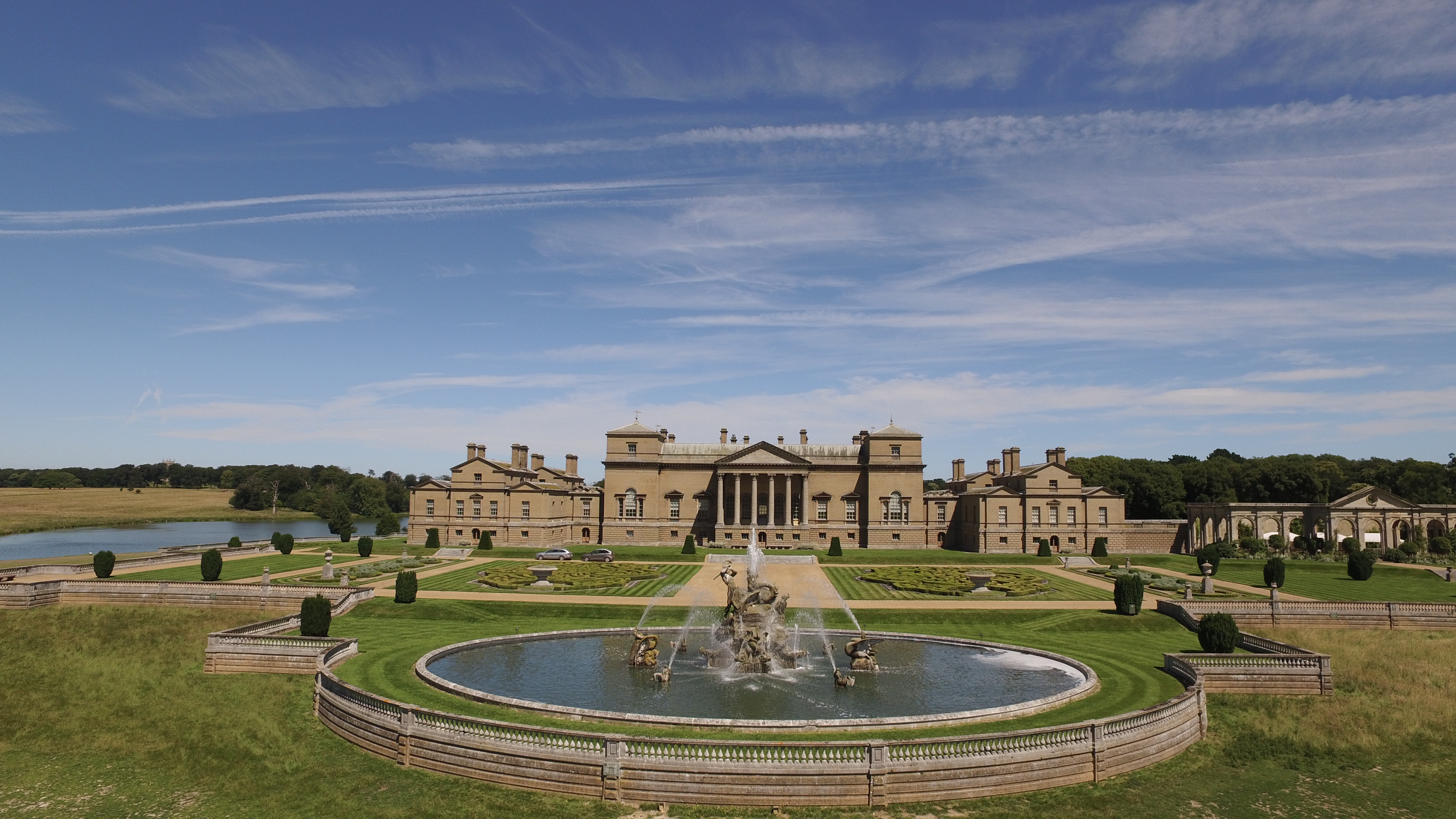
The 8th Earl of Leicester is Viscount Thomas Coke, whose ‘family seat’ is Holkham Hall, in Norfolk. In 2021, he won a Lords by-election to become a Tory hereditary peer.

Holkham Hall, Norfolk
Holkham Hall. Image by Holkham.j.lewis via Wikimedia Commons (CC BY-SA 4.0)

Lords are entitled to an allowance for every day they ‘sit’. For example, Viscount Coke received £2,166 in April 2024 for being present on six out of 11 sitting days, while Viscount Stansgate was paid £3,971 for the full 11-day attendance. 

Role is anachronistic and illogical 

Labour believes that hereditary lords are a sign of the past.

Nick Thomas-Symonds, Cabinet Office Minister, said when introducing the debate on 15 October: “In the 21st century, there should not be places in our Parliament, making our laws, reserved for those who were born into certain families, nor effectively reserved for men”.

East Anglian MPs speaking in the debate included Richard Holden, Tory MP for Basildon & Billericay, who asked why more fundamental reform had not been considered to avoid the need to legislate again. Oliver Dowden, however, spoke against any changes to the Lords. 

Gavin Williamson asked why Labour had dropped from the Bill the manifesto promise to introduce a retirement age of 80 for peers, and the pledge to strengthen ways in which disgraced members could be removed.

There were questions over whether Anglican bishops should be entitled to retain their seats while other faiths were unrepresented.

SNP MP Pete Wishart stated: “We are the only legislature in the world that has places reserved for clerics, other than … Iran”. He will lodge an amendment to abolish the Lords entirely, and the Liberal Democrats agree, hoping to force a vote on replacing them with elected representatives. Other amendments have also been lodged.

Resistance may be futile

There might be resistance when the Bill reaches the Lords: remaining hereditary peers may not go quietly. However, the Lords doesn’t usually completely reject legislation outlined in a manifesto for which the electorate has voted. With Labour’s huge majority this Bill is likely to pass.

An immediate consequence will be that the number of peers will fall by 11%, from 806 to 718, with the Tories remaining the largest group. The proportion of male peers will then be 67%, which is still unbalanced. The growing size of the Lords is a continuing concern, and this reduction will be effective only if prime ministers ensure that not too many new life peers are created, for example in their resignation honours.

It would remain an unelected house, but one with fewer echoes of the past.


More from East Anglia Bylines

A banner hangs outside the Consulat General Honoraire de France à Melbourne saying: "We demand that government create and be led by a Citizens Assembly for climate and ecological justice"
Community

Today’s constitutional must-have: Citizens’ Assemblies?

by Liz Crosbie
4 August 2024
Infographics from Easyfundraising

We are registered with easyfundraising! 8,000 brands will donate to us for free every time you use it.

It’s super quick and easy to SIGN UP, and will never cost you anything whatsoever. It’s FREE for you and HUGE for us!

Previous Post

The magic of planting your garden for wildlife

Next Post

Vast majority of Trump voters believe American values and prosperity are ‘under threat’

Jenny Rhodes

Jenny Rhodes

Jenny Rhodes lives in Essex and taught in London for many years, specialising in Literacy and English as an Additional Language. As well as education, she has a particular interest in gender equality and environmental issues. Jenny is a member of the EAB editorial team. Follow Jenny on Bluesky and Threads.

Related Posts

German radio operator WW2. This is a display in a museum in the Ardennes about the 1945 Battle of the Bulge. It shows a soldier sitting at a desk with a telephone attached to the wall, and a radio on the desk. It has wires coming from it to something in his hands - he is probably transmitting in Morse code.
Cambridgeshire

The Nazi spy at large in Cambridgeshire

by Stuart Burrell
8 November 2026
Woodcut of 3 witches on broomsticks flying with the middle one depicted as a devil heading towards a lady.
Culture

The magic hidden in our homes: six centuries-old ways to ward off evil

by East Anglia Bylines
31 October 2026
Old Glory Molly lined up in the dark to process. They are wearing dark clothes and carrying torches which throw light onto the bare branches above them. At the front of the procession is a plough dressed with cloths.
Culture

Glory be! The magic of Molly dancing cheers a winter evening

by Kate Viscardi
25 October 2026
The palace of Westminster on fire. An impressionistic image, viewed from across the river. The white stonework of Westminster Bridge on the right of the image glows orange from half way across the river as it reflects the huge flames from the fire. There are dense crowds on the shore in front of the artist, and boats with more spectators on the river.
Democracy

Westminster: it’s time for reform from the ground up

by Calix Eden
16 October 2026
Composite image showing a hand holding fused Anglo-Saxon coins, with St Peter’s Basilica and the River Tiber in Rome behind.
History

When Anglo-Saxon ex-pats were welcome in Rome

by Dr Tom Almeroth-Williams
15 October 2026
Next Post
Donald Trump at a pre-election rally

Vast majority of Trump voters believe American values and prosperity are ‘under threat’

SUPPORT OUR CROWDFUNDER

Tags

Activism Brexit Cartoons Christmas Climate Community Conservation Conservatives Democracy Economy Elections Environment EU Farming General Election 2024 Government Health History Housing Labour Letters Local government Net zero NHS Norwich Opinion Our place in Europe Party politics Pecksniff Politics Polling Pollution Poverty Reform UK Renewables Sewage Social care Something for the weekend Tax Trump Ukraine Voting Wealth Wildlife Women
East Anglia Bylines

We are a not-for-profit citizen journalism publication. Our aim is to publish well-written, fact-based articles and opinion pieces on subjects that are of interest to people in East Anglia and beyond.

East Anglia Bylines is a trading brand of Bylines Networks Limited which is separate to, but allied with, Byline Times.

Learn more about us

No Result
View All Result
  • About
  • Authors and editors
  • Complaints
  • Contact
  • Donate
  • Letters
  • Privacy
  • Network Map
  • Network RSS Feeds
  • Submission Guidelines
  • Download the Bylines Network App

© 2021-2026 East Anglia Bylines. Powerful Citizen Journalism. ISSN 3049-9771

No Result
View All Result
  • HOME
  • News
    • Brexit
    • Health
    • Education
    • World
  • Politics
    • Local government
    • Justice
    • Activism
  • Climate
    • Environment
  • Lifestyle
    • Community
    • Culture
    • History
    • Humour
    • Property
  • Business
    • Development
    • Economics
    • Finance
    • Transport
    • Farming
  • ANGLIA
    • Bedfordshire
    • Cambridgeshire
    • Essex
    • Hertfordshire
    • Norfolk
    • Suffolk
  • Series

Newsletter sign up

Crowdfunder

© 2021-2026 East Anglia Bylines. Powerful Citizen Journalism. ISSN 3049-9771