


When the Sycamore Gap tree was felled in September 2023, many assumed its story had come to an abrupt and senseless end. For more than a century, the distinctive sycamore had stood in a natural dip beside Hadrian’s Wall in Northumberland, becoming one of the most photographed and recognisable trees in Britain. Its destruction prompted an outpouring of sadness and anger that extended far beyond those who had ever visited it.
What followed received rather less attention. As the police arrived to secure the crime scene, a team from the National Trust quickly mobilised to harvest biological material from the fallen crown, working against the clock to preserve as much viable material from the fallen tree as possible. Teams snipped scions (young, bud-bearing twigs) and gathered seeds directly from the branches. Five bags of these twigs and seeds were immediately packaged and posted via overnight express to the National Trust’s specialist Plant Conservation Centre in Devon. There, horticultural specialists began the painstaking process of nurturing a new generation of saplings.
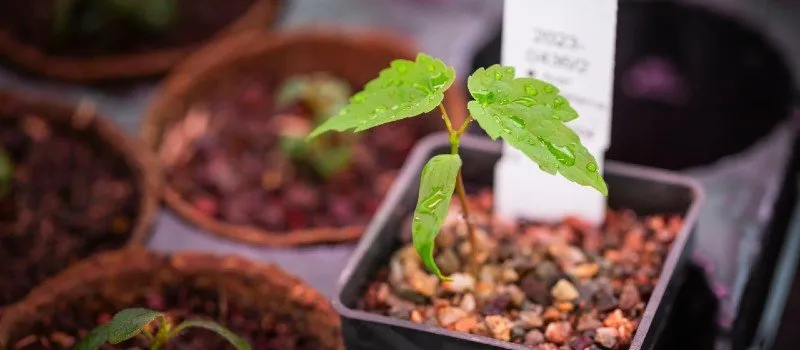
National Parks UK later joined forces with the National Trust to create the Trees of Hope project, bringing together conservationists, National Park teams, charities and community groups from across the UK. The response was remarkable. Nearly 500 organisations applied for just 49 saplings – one for each foot of the original tree’s height when it was felled. One of the successful locations was How Hill Nature Reserve in the Broads National Park, where a descendant of the original tree now overlooks the River Ant and Turf Fen Mill.
A national effort
The first successful seedling was presented to King Charles in 2024 and is destined for Windsor Great Park. Given the King’s long-standing commitment to environmental causes, the choice was a fitting one. Yet the wider project reflects a broader ambition.
Descendants of the original tree are now finding homes in hospitals, veterans’ organisations, community projects and protected landscapes across the UK. The Broads sapling forms part of a wider network of trees taking root across all 15 of the country’s National Parks, including locations such as Yr Ysgwrn in Eryri National Park in Wales and Benmore Gardens in Loch Lomond and the Trossachs National Park in Scotland.

More broadly, the applications speak to a growing recognition that nature and heritage are worth protecting, and that when something important is lost, there is value in trying to preserve what remains.
Why How Hill?
How Hill is a particularly appropriate home for one of the saplings. The reserve is one of the best-known locations in the Broads, attracting visitors throughout the year to its wetlands, wildlife, historic buildings and riverside views. It is also a place where generations of children have been introduced to the natural world.
A sapling grown from the original tree has now been planted there through a partnership between the National Trust, National Parks UK, the Broads Authority and the How Hill Trust. Lynsey Skeates, director of the How Hill Trust, said she hopes it will become part of the inspiration that the reserve has provided to generations of visitors, allowing the story of the original tree to be retold to future generations.
That educational role is significant. For more than 40 years, the How Hill Trust has welcomed children from across the region to learn about the landscapes, wildlife and heritage of the Broads. Many of those young visitors will now watch the sycamore grow alongside the reedbeds, waterways and marshes that make the National Park unique.

A new chapter
The original Sycamore Gap tree stood for well over a century. No one can know whether its descendant at How Hill will enjoy a similar lifespan, but the project was never really about replacing what was lost.
Instead, it has been about creating new places where memories can be made. The descendants of a tree that once stood in a remote corner of Northumberland are now being cared for in places across the UK’s four nations, from hospitals and veterans’ charities to National Parks and community projects.
As the young sycamore begins to establish itself beside the River Ant, it may eventually become a familiar part of the Broads landscape in its own right. Children visiting How Hill today may one day bring their own families back to see it. Future generations may know little of the events that led to its planting, seeing it simply as part of the landscape they have always known.
John Packman, chief executive of the Broads Authority, believes the location could hardly be more appropriate: “How Hill is a fitting location for the ‘Tree of Hope’. As it matures and grows it will become part of the wonderful views that represent the Broads National Park so perfectly, just as the Sycamore Gap tree did in Northumberland.”
More from East Anglia Bylines


Bylines Network Gazette is out!
The latest Bylines Network Gazette is out now. Become a Friend of Bylines Network or upgrade to a paid Substack subscription, and you will get access to a vital collection of citizen articles and stories.
Journalism by the people, for the people.



