• Contact
  • About
  • ISSN 3049-9771
  • Authors and editors
NEWSLETTER SIGN UP
East Anglia Bylines
Advertisement
  • HOME
  • News
    • Brexit
    • Health
    • Education
    • World
  • Politics
    • Local government
    • Justice
    • Activism
  • Climate
    • Environment
  • Lifestyle
    • Community
    • Culture
    • History
    • Humour
    • Property
  • Business
    • Development
    • Economics
    • Finance
    • Transport
    • Farming
  • ANGLIA
    • Bedfordshire
    • Cambridgeshire
    • Essex
    • Hertfordshire
    • Norfolk
    • Suffolk
  • Series
No Result
View All Result
East Anglia Bylines
Home Politics Activism

How to create your own little pocket of paradise

James Canton explains how he made his wildlife heaven in rural North Essex, and how we can all do something for nature

Jenny Rhodes by Jenny Rhodes
10 August 2025
in Activism, Environment, Lifestyle
Reading Time: 8 mins read
A A
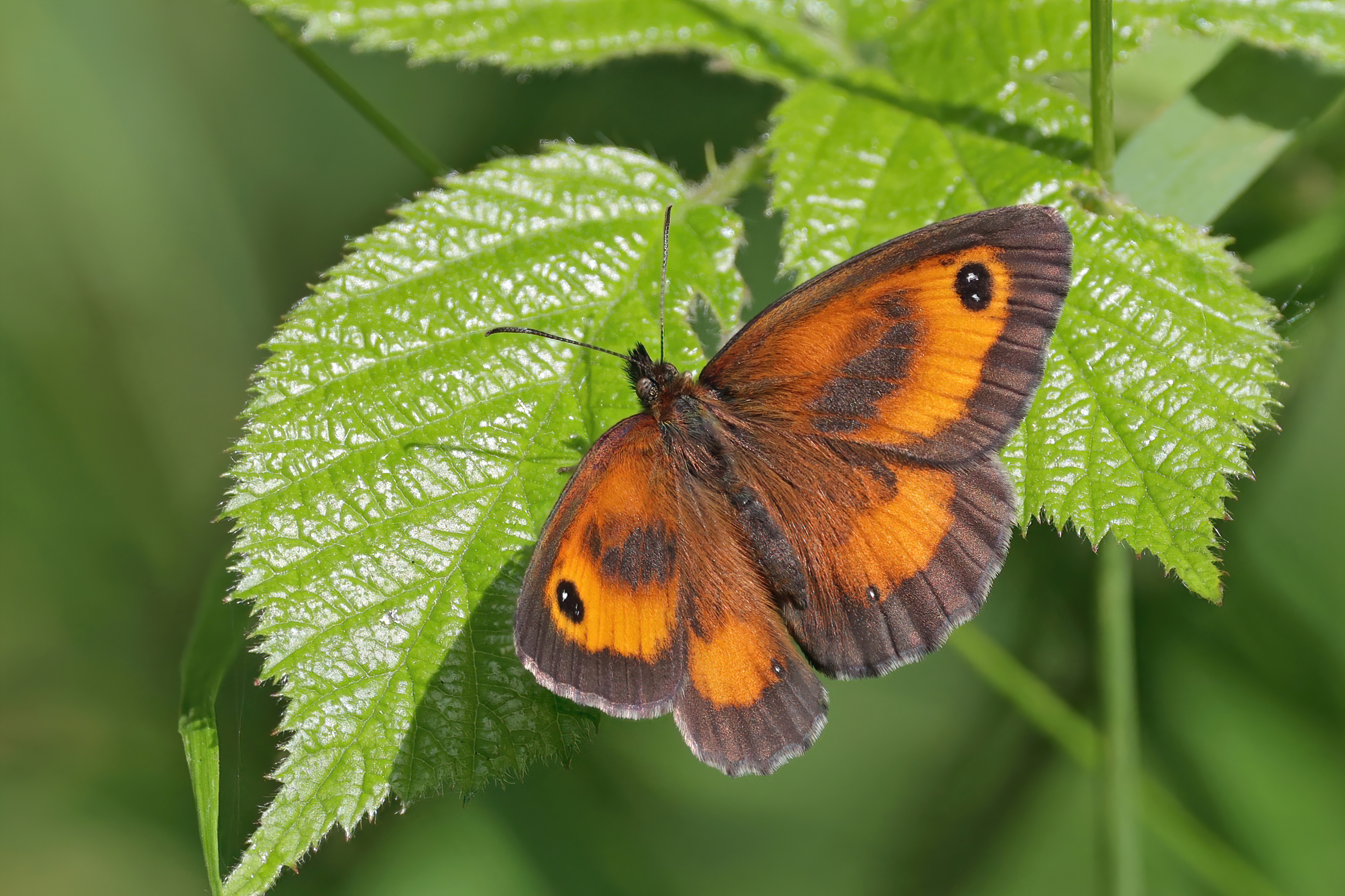
Gatekeeper butterfly. It's quite small, with a broad band of brown around orange wings smudged with brown, and two dark brown 'eyes' near the wing tips.

Gatekeeper butterfly image by sharpphotography.co.uk. CC BY-SA 4.0

Share on Bluesky

It’s something I’m sure many people dream of: having a small piece of land and allowing wildlife to thrive. Dr James Canton, an author and Essex University senior lecturer, has done just that, and written a book, ‘Renaturing: Small Ways to Wild the World‘, about the journey. Recently he told me the story of how it evolved, and his enthusiasm is infectious.

Originally from London, in 2000 he bought a former farm labourer’s cottage in Great Maplestead and settled in to enjoy the peace and quiet of his plot.

Perhaps serendipitously, Canton soon noticed a ‘For Sale’ sign marking a two-acre field behind his garden. He decided to buy it. Initially, he enjoyed just walking through the waist-high grass, or lying down and enjoying the peace. Then he mowed the grass and invited friends from London down to play cricket on it.

Going wild

It was rather a grass ‘monoculture’, and after a few years, the idea of letting it ‘go wild’ germinated in his mind. So he simply stopped cutting the grass (apart from making some pathways) to see what would happen. He noticed jays burying oak acorns, as they do. These have now grown into small trees. Other plants grew large, including brambles, blackthorn and wild flowers.

He aimed to create a wildflower meadow to attract insects and birds: a complex but natural eco-system.

Seed heads in the meadow. They are mostly white. The meadow is enclosed by trees.
Oxeye daisies and cornflowers along the side of a path cut through the meadow.
A scythe resting on a wheelbarrow with scythed grass. Beyond are a couple of other piles of scythed grass.
All images by James Canton, used with permission.

What followed was a journey – for him and well as the field. As the meadow evolved, Canton learned a lot from others and from experience. He consulted naturalists, soil experts and insect experts along the way.

He learnt how to scythe as he still cuts some grass annually – ‘gentle manipulation’, he calls it. Canton feels as if he’s gone back in time a hundred years, not just because of the old skills, but also the way the area has filled with wildlife again, particularly insects.

His neighbours are generally accepting – “they know what I’m up to,” says Canton. Perhaps people now understand that supporting nature is good for our wellbeing too.

Renaturing not rewilding

Canton explains that rewilding is about bringing a large area of land (maybe 100 acres) back to a natural state with its own eco-systems of creatures, possibly requiring a ‘top predator’. But he says, “that’s not possible in a smaller area, like a field or garden, so we can ‘renature’ them instead.”

Bee and clover. The bee is hovering above heads clover that is whit with pink patches on the petals.
Close-up photo of a bee on a buttercup. We can see all the fur on the bee's back and legs, and the delicate veining in the wings.
Corizus hyoscyami, or Cinnamon bug. It's an orange insect with black spots on both upper and under side. This one is clinging to the underneath of a seed-head.
Bee and clover | Bee on a buttercup | Corizus hyoscyami, or Cinnamon bug
All images by Maddie Last, used with permission.

Canton is convinced that his meadow now has many more species than it did. Recently a moth expert did a nocturnal survey in his meadow and identified 107 species, including the scarce four-spotted moth.

He says 2025 has been good for butterflies – helped by a warm, sunny, dry April – and he’s observed an abundance of gatekeepers, which need long grass.

Sounds lovely; what can I do?

Canton says it’s best to work with what you’ve got – soil type, local climate and plants that thrive in these conditions.

If you have a garden, choose which part you want to ‘renature’. Perhaps spend a year doing very little, keep your senses alert and watch an eco-system evolve. See what plants find their way to your plot; if they come by chance it’s likely they’ve found the right conditions to grow. And the joy is in witnessing plants flourish and waiting to see what insects and birds they bring.

Canton suggests that, if you can, you should install a small pond or wild water container: you may attract creatures like newts and water boatmen.

If you find that grasses take over, Canton recommends planting yellow rattle seeds. This plant can help create or restore meadows by suppressing the growth of dominant grasses. It’s an annual and needs re-sowing in autumn. Canton has just harvested 1.5 kilos of rattle seeds from this year’s plants to sow in the autumn for next year.

Image by James Canton. Used with permission Note: this image is best viewed on a larger screen.

To plant, or let grow

Species that Canton has found work well on his Essex clay soil include these:

  • Knapweed (centaurea)
  • Ivy
  • Corncockle
  • Marjoram (wild oregano)
  • Ragwort (wear gloves/don’t let it spread near farmland)
  • Herb robert
  • Fireweed (rosebay willowherb)

Some have long been viewed as weeds but all play an important part in attracting pollinators, thereby enhancing biodiversity.

Ivy is perhaps one to control to allow space for other plants, but Canton points out that when ivy flowers in the autumn, it provides an important late-season source of nectar and pollen. It’s a tonic on a sunny November day to watch bees floating around the ivy.

If brambles start to take over, cut them back, advises Canton. Many pollinators are attracted to new regrowth on bramble plants.

If you can only devote a window box to renaturing, then herbs are a good bet. The flowers of marjoram, mint, thyme and oregano are all attractive to insects, and of course you can harvest the leaves for cooking. A box with pollinator-friendly flowers can provide a mini-habitat for honeybees.

If your neighbours look askance at your wild plot, Canton suggests putting up a sign saying ‘Wild Garden’. If people see you’re providing habitat for bees and butterflies, they’re usually accepting.

Small or large

Canton says everyone can do something, whatever the size of their space. He observes, “Renaturing is about democratising rewilding, moving to a different mindset where we’re part of the natural environment, rather than ‘owning’ it.”

His book tells the story, and shows us, with tips and guidance, how we can all be involved in renaturing the world, whether on a small or large scale.


More from East Anglia Bylines

Red common poppy flower with a bumblebee just above it
Environment

Here are the flowers that both bees and humans like best

by East Anglia Bylines
13 July 2025
Starlings on a lawn
Environment

It’s time to love your lawn

by Vanna Bartlett
3 May 2025
Deer in rewilded woods
Cambridgeshire

Rewilding: leaving nature alone

by Richard Broughton
14 June 2023
Peahen with her 3 chicks
Environment

An unexpected guest – the beautiful peahen who chose us

by Rachel Fulcher
5 August 2025

Download the Bylines app to get our content straight to your phone!

Get the app
Tags: InterviewWildlife
Previous Post

False alarm at sea: MP spots migrants, finds former Royal Marine

Next Post

East of ordinary: Suffolk’s beautiful landscape and fascinating history

Jenny Rhodes

Jenny Rhodes

Jenny Rhodes lives in Essex and taught in London for many years, specialising in Literacy and English as an Additional Language. As well as education, she has a particular interest in gender equality and environmental issues. Jenny is a member of the EAB editorial team. Follow Jenny on Bluesky and Threads.

Related Posts

Large car park with solar structures over the cars, keeping them in shade.
Climate

Good news for the planet: the soaring rise of solar energy

by East Anglia Bylines
10 November 2026
A newly excavated, muddy pond area containing a shallow pool of water, showing signs of recent conservation work. The clearing is surrounded by bare, turned-up brown earth, mature green trees, and low ground vegetation. In the background to the right sits a traditional black weatherboarded barn with a red tiled roof, separated from the clearing by a wooden fence.
Environment

Seven ponds set to reveal their hidden wildlife potential

by Rebecca Turner
8 November 2026
German radio operator WW2. This is a display in a museum in the Ardennes about the 1945 Battle of the Bulge. It shows a soldier sitting at a desk with a telephone attached to the wall, and a radio on the desk. It has wires coming from it to something in his hands - he is probably transmitting in Morse code.
Cambridgeshire

The Nazi spy at large in Cambridgeshire

by Stuart Burrell
8 November 2026
A home energy adviser points to information on a leaflet while discussing energy-saving measures with a woman in her home.
Lifestyle

Keeping Norwich homes warm: free advice as Britain invests in cleaner energy

by East Anglia Bylines
7 November 2026
Farage creeps away. He is tip-toeing away from a signpost that points in 3 different directions: Westminster and Clacton towards the left and, towards the right, 'Away', which is the direction he's going in.
Featured

Farage is a firebrand

by Helen Forte
6 November 2026
Next Post
Two boats near Woodbridge Tidemill. The boats are fishing boats, one blue and one white. the mill is built of overlapping horizontal planks, painted white. There are some people sitting on benches on the quayside, and sme walking.

East of ordinary: Suffolk’s beautiful landscape and fascinating history

SUPPORT OUR CROWDFUNDER

Tags

Activism Brexit Cartoons Christmas Climate Community Conservation Conservatives Democracy Economy Elections Environment EU Farming General Election 2024 Government Health History Housing Labour Letters Local government Net zero NHS Norwich Opinion Our place in Europe Party politics Pecksniff Politics Polling Pollution Poverty Reform UK Renewables Sewage Social care Something for the weekend Tax Trump Ukraine Voting Wealth Wildlife Women
East Anglia Bylines

We are a not-for-profit citizen journalism publication. Our aim is to publish well-written, fact-based articles and opinion pieces on subjects that are of interest to people in East Anglia and beyond.

East Anglia Bylines is a trading brand of Bylines Networks Limited which is separate to, but allied with, Byline Times.

Learn more about us

No Result
View All Result
  • About
  • Authors and editors
  • Complaints
  • Contact
  • Donate
  • Letters
  • Privacy
  • Network Map
  • Network RSS Feeds
  • Submission Guidelines
  • Download the Bylines Network App

© 2021-2026 East Anglia Bylines. Powerful Citizen Journalism. ISSN 3049-9771

No Result
View All Result
  • HOME
  • News
    • Brexit
    • Health
    • Education
    • World
  • Politics
    • Local government
    • Justice
    • Activism
  • Climate
    • Environment
  • Lifestyle
    • Community
    • Culture
    • History
    • Humour
    • Property
  • Business
    • Development
    • Economics
    • Finance
    • Transport
    • Farming
  • ANGLIA
    • Bedfordshire
    • Cambridgeshire
    • Essex
    • Hertfordshire
    • Norfolk
    • Suffolk
  • Series

Newsletter sign up

Crowdfunder

© 2021-2026 East Anglia Bylines. Powerful Citizen Journalism. ISSN 3049-9771