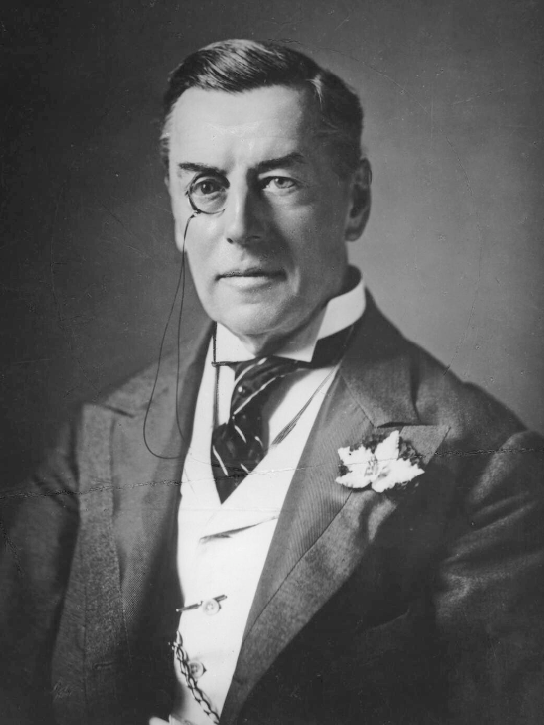
In 1903, the populist politician Joseph Chamberlain launched his grand scheme of ‘tariff reform’. It was an attempt to shore up the Empire by placing tariffs on goods imported from elsewhere. He was already a popular figure, a man of the people, and his flag-waving jingoism immediately struck a chord.
He became the hero of the music halls, he spoke at mass rallies, there was an outbreak of flag waving. The actual details of the plan were vague but seemed unimportant. Even when Chamberlain himself admitted that tariffs would mean higher prices, nobody listened – for a while.
Does the story ring any bells? We are not the first to find ourselves facing an apparent populist revolt of nationalist forces against foreigners. Extreme right wing and xenophobic forces seem to rule our streets, while those in power do nothing. Meanwhile, every racist snarl and every lie is dutifully reported by the news media.
Changing the story
So how do we get out of this? We can better understand the problem by analysing the actors in this scenario. They and their relationships with each other have given us the present violent and disturbing narrative, and that’s what we have to change. No political plan can work unless you control the narrative, and at the moment the story of small boats and refugees is almost the only narrative in town.
These are seven players who make up that storyline… There are the refugees themselves; those who want to turn them back; the counter-protesters who support the refugees; the government; the other political parties; the police; and the news media who report events. Let’s leave out the refugees, who already have enough on their plate, and start with those who “don’t want them here”. We need to divide the core group from the hangers-on, since it doesn’t help to confuse the violent troublemakers with those who may have a misplaced, but what they feel is, a legitimate grievance.
The government could act, but that depends on their trying to remember where they left their balls, and that could be a long and fruitless search. They are staying out of it, but may be forced to act under certain circumstances, which we’ll discuss.
The police are passive players but may be drawn into the narrative if the government intends to act, or if either group of protesters change tactics. That leaves the counter-protesters, the other political parties, (and we’re talking here about the Liberal Democrats and the Greens, of course), and the news media. We’ll take them next.
The role of the media

The news media are rightly criticised, but only the usual right-wing suspects are actually going to invent news. In the meantime, small boats and sending back the refugees is the only story in town. Farage et al are given free rein, while every other politician is silent. We can’t blame the hacks for reporting what is right in front of them, and we can’t tell them what to write about. So our aim must be to change the narrative by changing the character of the story. Have them write about the small boats in a different way.
The counter-protesters are active, but in the wrong role. The racists shout their belligerence, and the counter-protesters deny it: so they are on the defensive. The story is still about how refugees in small boats are in some way a threat. But suppose the counter-protesters were to organise nationally, under an easily understood objective which will progress the story away from families huddled disconsolately in hotels. The racists would attack it, but for the government it might be a godsend. They fear clamping down on hotel protests, since it lays them open to charges of ‘two-tier policing’; but if an organised opposition to the racists was to emerge, the government could comfortably clamp down on both.
The hacks are looking for something different to say about the narrative, and this would provide a new development. For once, the news would not be about the hotel protests, but whatever scheme the counter-protesters propose.
About this time, we might well ask about the conspicuous absence from the fray of the trade unions. Where are they in all this? There is a role for them, if they choose to take it. A new player in the narrative changes it again, and other new players may emerge, but nothing can be done while we are stuck with two groups shouting at each other outside a hotel.
The missing players
The players we haven’t mentioned yet are the Liberal Democrats and the Greens, who are also keen to keep their private parts out of range of angry voters. In spite of their recent surge, the Greens probably don’t have the clout to weigh in here, but for the LibDems, this might be a once-in-a-decade opportunity. The party is the one actor with the opportunity to break the narrative, and at the same time to re-open the entire debate about this country’s international relations and, in particular, with the European Union.
Liberal Democrats, your time has come…
The scenario is simple, though it takes far more chutzpah than the party has yet exhibited. It rests upon the simple fact that there were no small boat crossings prior to the referendum.
A bold alternative
So how to stop the boats? At their autumn conference, suppose the LibDems declare an intention to stop the boats by rejoining the EU. We’re still talking about small boats, but through a scenario which has proven 100% effective. Whatever abuse the right heap upon the argument, the facts are unassailable and, more important, we’re not talking about families cooped up in hotels anymore. We now own the narrative.

Of course, that proposition is wildly simplistic, but we are not talking about practicalities of joining; we’re talking about hope and ambition, and the narrative is taken out the hands of the xenophobes. The context is changed, undermining the racists’ argument and offering a simple solution based on irrefutable facts. Opponents can criticise it as they like, that doesn’t matter. The narrative has shifted to one which is in the hands of the centre-left.
From there, of course, unless the polls are completely wrong, a majority of the now-EU supporting electorate have a party they can support, and the LibDems leap in popularity. Freedom of movement (aka fear of small boats) is no longer a bogeyman, and – enthused by their improved standing in the polls – the LibDems can turn more confidently to open support for EU membership. Labour is likely in all this to have slumped further in popularity, and – who knows? – a few of those Labour MPs apparently bound and gagged and slung in the boot of a car might escape and make their voices heard.
And let’s not forget that opening story about Joseph Chamberlain and his reluctant admission that tariff reform would increase the cost of living, and its lesson for Brexit. At the 1906 election, the Liberals ran an advertisement showing two loaves of bread. One small one was marked ‘tariff reform’, the much larger was ‘free trade’. The Liberals won with a landslide.
More from East Anglia Bylines


Subscribe to our newsletters
Each of our Bylines sends a newsletter every month and we also send out a ‘Best of Bylines, featuring a selection of the best articles from across the network