


The past five years since East Anglia Bylines launched have been anything but quiet. Politics has been reshaped, the transition to clean energy has accelerated, debates about Britain’s relationship with Europe continue to evolve and questions around migration and identity continue to shape public debate. Through it all, our publication has aimed to go beyond the headlines, providing context, analysis and a distinctive satirical take on events. Following on from our first part, looking at our history and culture, in these reflections, our editors look back at some of the stories that have defined this extraordinary period of change.
Politics
Stephen McNair
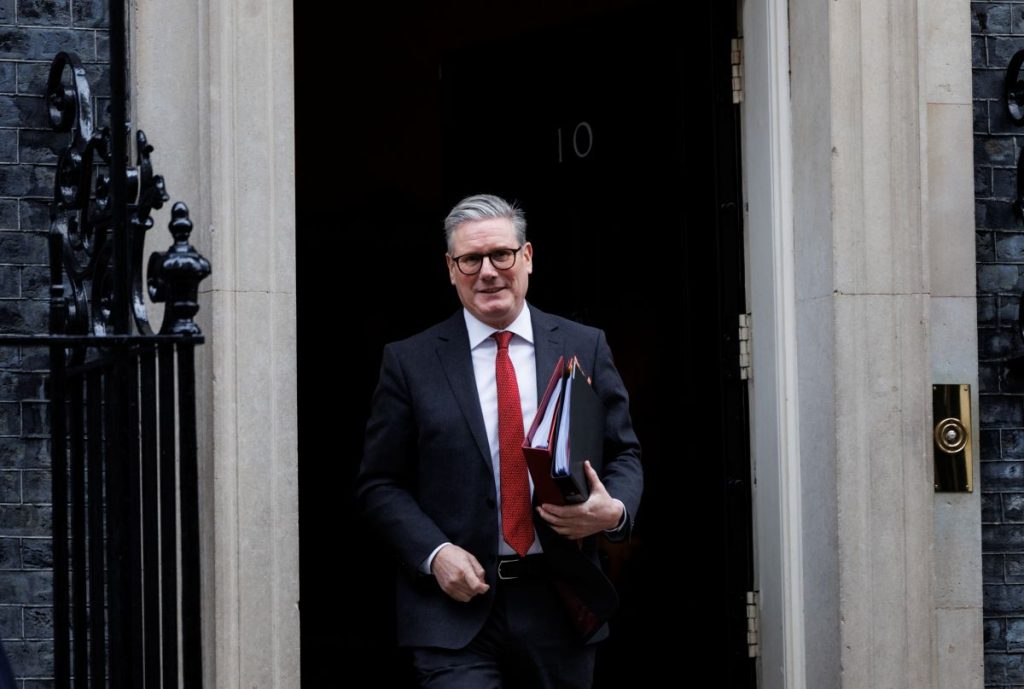
Politics – local, national and international – is a staple topic of our work, with well over 1,000 stories over the five years. In the early years a regular topic was the fallout from Brexit, with contributions from experienced diplomats to oyster farmers. We watched the rise and fall of Boris Johnson, and our most viewed article ever was a review of the first six months of the Starmer government. We have provided detailed coverage of our constituencies in national elections.
In local politics we have provided running blogs on local council elections, and tracked the impact of the government’s devolution plans. We broke the story when 200 people besieged Thetford Town Council over false allegations of plans to restrict people’s movement.
Most recently we have followed the rise of Reform UK on our county councils, and their plans to cancel net zero policies. And of course, we have covered Donald Trump!
Migration
Elana Katz
Modern Britain is generally considered to have a population of well-settled and largely integrated immigrants from all over the world, contributing to our rich and multifarious culture.
Over approximately the last 50 years, in general, people were not particularly worried about immigration. But from the 2000s, when the expansion of the EU brought significant numbers of Eastern Europeans to the country, things began to change – people began to complain that newcomers were taking their jobs and using public services such as GPs and the NHS, which was increasing waiting lists, etc.
By the time of the EU referendum in 2016, almost 50% of the population cited immigration as a key issue and politicians on the right began to use this as a political opportunity. They created a narrative that blamed immigration for a host of social and economic ills, and this became one of the driving forces for the Brexit vote in 2016. Since then, the narrative has become toxic, divisive, in some circumstances, violent.

Unsurprisingly, given that the Bylines concept grew out of the result of the referendum, immigration and related topics have featured strongly in East Anglia Bylines over our first 5 years. We have covered topics such as migration policy and the impact on individuals and local communities with personal testimonies, opinions and analyses.
You can read about some of the crazy ideas that the Johnson government came up with to stop migrants crossing the Channel, e.g. by allowing the Border Force to use armoured jet skis to “nudge” boats carrying migrants back into French waters; remind yourself about the conservative government’s illegal migration bill, described as not only immoral but illegal, so much so that even Suella Braverman couldn’t certify that it didn’t breach international law.
Pecksniff often referred to the plight of asylum seekers, and was particularly vociferous when describing Sunak’s plan to send asylum seekers to Rwanda.
By mid 2023, the Conservatives’ immigration policy was in tatters, and a poll at the time showed that out of 12 key issues, immigration was rated 11th in importance. East Anglia Bylines published the Fabian Report: What would a decent immigration policy look like?
We have tried to reframe the public debate away from fear and towards practical, humane solutions, offering interesting perspectives based on evidence and lived experiences, or on opinion.
One of our exclusive articles is a first-hand account of the families sheltering in a Norfolk hotel while protesters gathered outside, describing the fear felt by children and parents alike.
We revealed the way anti-migrant activism is amplified and social media creators have monetised confrontations at asylum accommodation. We’ve been able to offer a more nuanced picture than what is often presented in the media on the impact asylum accommodation has had on local communities, such as in Epping, or in Wethersfield. We have also been able to describe some positive experiences about some of the counter demonstrations in solidarity with migrants or opportunities given to refugees to participate in their new environment.
Energy
Stephen McNair

The drive towards net zero has transformed parts of East Anglia over the past five years. As part of the drive for net zero carbon emissions, the region now generates more renewable energy than any other, and it remains a popular topic with our readers. We have covered the expansion of offshore windfarms, and the challenges of getting the power to the grid, with a series of stories on the contentious National Grid plans for pylon lines across the region.
We have reported on the role of hydrogen, including plans to make Bacton in Norfolk a national centre for hydrogen production. The development of Sizewell C nuclear power station remains contentious.
We have written about heat-pumps and geothermal energy. We have covered the potential of agrivoltaics to make solar panels compatible with farming, and on the government’s decision not to encourage their placement on car parks.
Satire
Aidan Baker
This has been part of our published output from the beginning. Among the initial band of recruits was Helen Forte. In her own words, she’s an Essex girl and a Suffolk mother and grandmother. And she’s been an illustrator more or less as long as she’s been a teacher. Her first cartoon for us appeared on 31 July 2021, with Boris Johnson (remember him?) asking, like the foolish councillors in the legend, a bit much of the Pied Piper of Hamelin. Helen’s latest work for us is the icon for the diary of fictional councillor Mike Stray.

Former Times columnist Martin Waller has given us a number of good pieces over the years. On 18 September 2021 Martin wrote about some of the more outrageous bright ideas that Johnson’s cabinet produced as desperation set in
The home-grown satirical talent includes Wil Harvey, a former biomedical researcher and founder of the British Water Tower Appreciation Society (mentioned by my colleague Sarah Patey in our companion article). Wil’s satirical contributions include a spoof in December 2022 imagining the terms of the questions put to our masters in the course of Operation Hillman – the investigation into the lockdown-busting parties that were held in Downing Street around Christmas 2020.
One of our most prolific satirists is Ben Smith. Ben imagined an early draft of the King’s speech to an American audience earlier this year. Then, watching Reform UK’s spectacular gains in the local elections, he embarked on his diary of fictional Essex Reform councillor Mike Stray, now with that logo by Helen Forte I mentioned earlier. This has developed in ways Ben didn’t envisage at the beginning, and we’re all on tenterhooks to see where Ben takes it after Clacton.
Our longest serving satirist is Mr Pecksniff, who has turned in a diary column pretty much every Saturday since November 2021. Mr Pecksniff is better company than the Dickensian moralist from whom he takes his name. His satire is of the kind that works best with me, for whom irony is the blind spot in my sense of humour. There has to be more to a joke than just that you’re saying the opposite of what you mean. Mr Pecksniff offers shrewd, informed observations of the political scene, enlivened often with outrageously apt metaphors and turns of phrase. I believe he invented the description of Nigel Farage as a “coin-operated phoney“; if he didn’t, it’s not untypical of what he would call his “mots justes”. My wife’s Saturday begins with a thorough read of Mr Pecksniff s Diary, and that’s probably true for many across East Anglia.
Brexit: the question that started it all
Anna Damski
When East Anglia Bylines publishes this anniversary feature, it will also mark our 3,000th article. Looking back, that’s not something I could ever have imagined when we launched in July 2021. But then, neither could I have imagined that Brexit would change the course of my own life so profoundly – and yes, the two are linked.
Like thousands of others, I became politically active after the 2016 referendum, joining Suffolk for Europe and later becoming its chair. I did so because, for me, Europe was never simply a political question. As someone who is half Polish and half English, it was deeply personal. And my search for an answer led me down a path I could never have predicted.
After Boris Johnson won the 2019 General Election, many of us knew the campaign to stop Brexit had reached its end. But we also believed the conversation about Britain’s future, and the forces that had brought us here, were far from over. We were down, but not out.

The Bylines Network grew out of that moment. Mike Galsworthy – one of the leading voices in the pro-EU movement – wanted to create a different kind of journalism: independent, evidence-based and rooted in communities rather than Westminster. Journalism that questioned those in power, whether local or national. Journalism written by citizens, for citizens, giving people a voice in the democratic conversation rather than simply asking them to consume it. Teaming up with Louise Houghton, Yorkshire Bylines was launched deep in lockdown in April 2020.
With the help of the network of activists I’d come to know across the region, East Anglia Bylines was born in July 2021 – the Bylines Network’s 7th publication. When we launched, I thought Brexit would remain the defining story. When I consider the 3,000 articles we’ve published, I realise I was only partly right.
Two years often stand out in my mind: 2012 and 2016. In 2012, Britain welcomed the world for the London Olympics. I spent ten months in Stratford, next to the Olympic arena, helping train the people who would make the Games happen. There was an overwhelming sense of optimism, pride, confidence and feeling like we were outward-looking.
Just four years later, we voted to leave the European Union. Somewhere between those two moments, something changed. The questions raised during the referendum campaign weren’t simply about Europe. They were much deeper: about identity, community and Britain’s place in the world. I don’t know to what extent those divisions had existed before, or whether they had deepened in the years following the Olympics. But I do know they have shaped so much of what we’ve reported since.
When we started, I thought Brexit was the story. Five years of editing East Anglia Bylines has taught me that Brexit was really the beginning of a much bigger conversation we needed to have.
Over that time, we’ve reported on national politics, local government, climate change, farming, wildlife, environment, devolution, refugees, culture, history and, of course, Europe. We’ve investigated councils, scrutinised those in authority and celebrated the people who make our communities what they are. Over the course of almost 100 articles in Our Place in Europe series, we’ve continued to explore Britain’s relationship with the continent. But that series has only partially been about institutions and treaties. Like so much of what we’ve published, it’s ultimately been about the kind of society we want to build together.
While Brexit may have given birth to East Anglia Bylines and the wider Bylines Network, five years of citizen journalism changed how I understood it. What remains are questions about people, identity, belonging and whose voices get heard.
Looking back over 3,000 articles, yes many have been about politics, Europe and Brexit. But what’s stayed with me are all those behind the stories. The hundreds of volunteers who have freely given their time to write, edit and share our output on social media. The citizens determined to hold local decision-makers to account. The campaigners striving to improve their communities and the world around them. The artists, farmers, scientists, historians, teachers and countless others who’ve trusted us to tell their stories.
It was Brexit that brought me to East Anglia Bylines. But it was citizen journalism that taught me the most important stories were never just about Europe. They were – and still are – about people.
More from East Anglia Bylines





