The BBC is arguably Britain’s greatest cultural institution: one of the few things for which we are still admired worldwide. Despite changing media habits, the average British adult spends over 15 hours a week with the BBC, and 94% of people still use it every month. Two thirds of people think the corporation is effective in delivering its mission. But it is under attack.
The challenge
The attack comes from three directions. Politicians (on all sides) suspect it of systematic bias against their particular world view. Commercial interests resent its scale, variety and quality and would like to take over parts (but not all) of its activity. And some would like to replace its pursuit of objective truth with partisan and divisive politics.
A trusted news source
Politicians tend to see the BBCs as all about news and current affairs, and mostly about TV. Certainly, with 120 hours of news broadcasts a day, news is a key part of the organisation. Polling regularly finds the BBC ranked in the top five most trusted news sources in the world. In the USA it comes second only to the Weather Channel for trustworthiness, which may explain why Donald Trump has made it a target.
But news is only a small part of its activity.
A public broadcaster

The BBC is a public service broadcaster, with a founding Charter mandating it to inform, educate and entertain. The business model of its commercial competitors, and of social media, focuses on audience size, achieved by giving people what they already know and like. By contrast, the BBC stretches us, giving insight into views and ideas which we would never encounter in our everyday lives.
A unifying voice
The BBC has always been seen as an authoritative and unifying voice for the nation. Over 13 million watched the last royal wedding, and 12 million watched the football World Cup final this year. Three million watch its budget coverage, and it is turned to as an authoritative voice in times of crisis like Covid or natural disasters.
If there is bias, it is not in favour of left or right, but of the status quo. It provides space for many new ideas and controversial views, but sometimes framed in what it sees as a mainstream perspective. When the ‘Overton window’ swings to the right, the BBC follows.
An educator
Education, in the broadest sense, is central to almost all its output. Some is explicit, from Kenneth Clark’s Civilisation in the 1960s to David Attenborough’s wildlife series. Melvyn Bragg’s In our time, offered two million listeners a week expert discussion of topics as varied as the Epic of Gilgamesh and Godel’s Incompleteness Theorem.
But much of its drama output also has an educational role. Seventy-four years ago ‘The Archers’ was launched to inform farmers on current developments in agriculture, and it remains Radio 4’s most listened to non-news programme, providing many city dwellers with insight into rural life. In the 1960s Cathy come home raised awareness of homelessness, leading to the rise of major charities, Shelter and Crisis. Today, Blue Lights introduces mainland audiences to the harsh sectarian world of Belfast. And far more people encounter Shakespeare and Jane Austen through BBC drama than will ever meet them in the theatre or on the page.
Its children’s broadcasting has always had a strong emphasis on active engagement, through series like Blue Peter, involving viewers and listeners in activities, competitions and events, stretching young minds, and reaching some who would otherwise be very isolated.
A patron of the arts

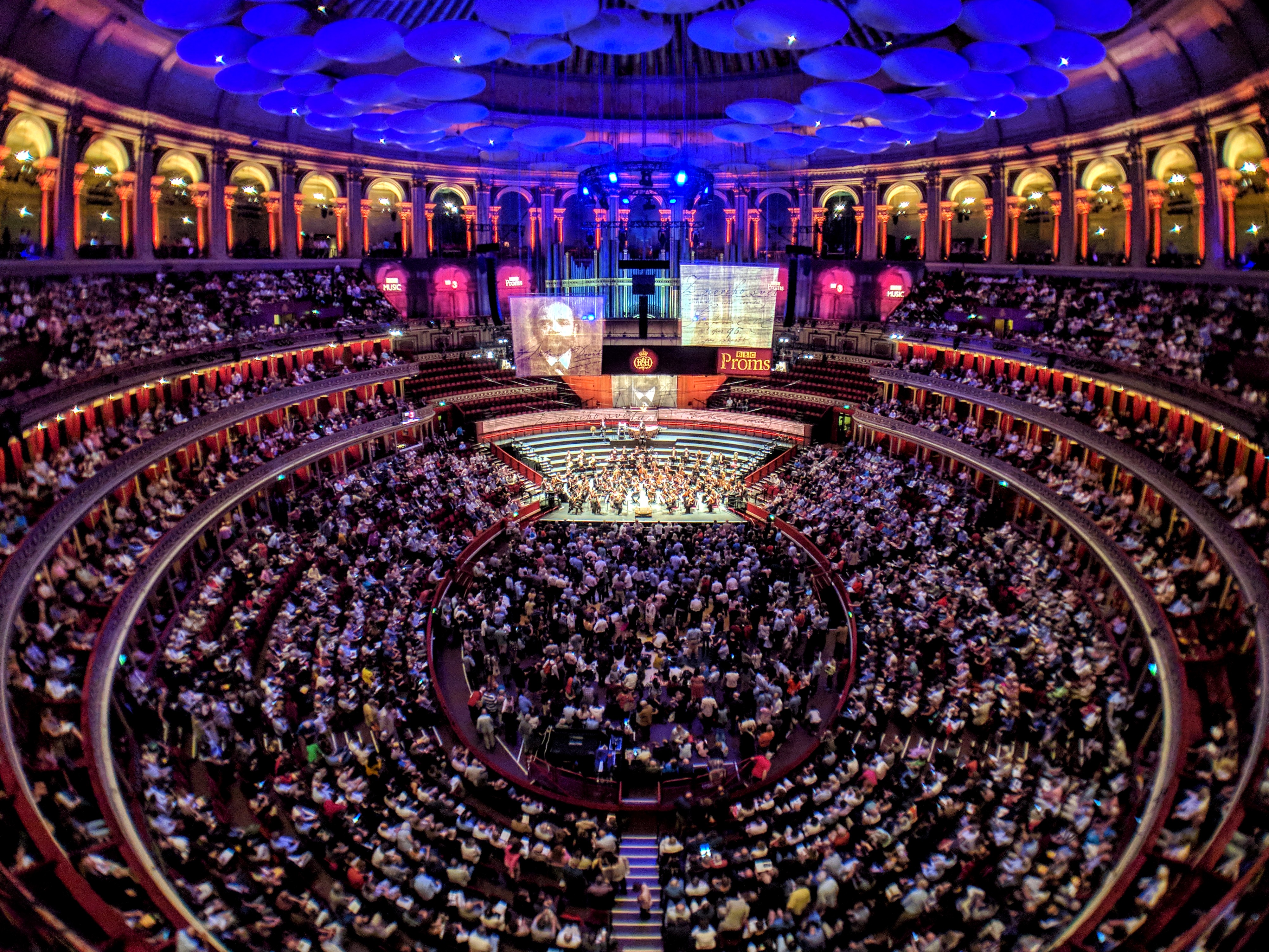
The BBC is central to the nation’s diverse musical culture, with broadcasts ranging from the most advanced classical music to the latest trends in popular music. Its five professional orchestras and two choirs perform 400 live concerts a year. And for a century it has organised the world’s largest music festival – the Proms – with a diverse programme of 90 concerts every summer.
A global voice
Its reach goes far beyond the UK itself, projecting a British view of the world globally. The World Service is still the world’s largest broadcaster, with journalists in 59 countries. In a divided and fragmenting world, it reaches 450 million people in 40 languages every week. And its international commercial arm, BBC Studios, contributes around £200 million a year to the BBC budget.
A launch pad for innovation
Critically, the scale and range of the BBC enables it to take risks and innovate. In the 1970s it was key to the creation of the Open University, a radical experiment in distance learning, and now one of the largest and most respected higher education institutions in the world. Its Computer Literacy programme, built around a partnership with Acorn Computers, introduced a generation of young people to computing. And manufacturing the BBC Microcomputer gave Acorn the springboard to become ARM computers, whose chip designs now power almost all the world’s phones.

It also pioneers new broadcasting ideas. When the BBC launched coverage of the Women’s World Cup in 2015, it was received opinion that there was no audience for women’s sport, which accounted for less than 5% of all sports coverage. But the BBC took it up, and this year, 22 million people watched some stage of the Women’s Euros.
New media
As technologies evolve, it has developed. It’s 1,000 live podcasts range across news, drama, science, music, comedy and culture. With over 200,000 pages, its website is one of the biggest in the world, with 1.2 billion visitors a month. And it is the biggest news site in the world, operating in 42 languages.
Fighting the challenges
The size and diversity of the BBC, and its commitment to all three elements of the charter remit make it unique, and respected, worldwide. Its success depends on the scale and diversity of its work. Keeping the charter principles, and defending its range and independence are critical. Hiving off the most successful elements to commercial rivals would fundamentally weaken it. Fewer people would encounter new and challenging ideas.
So, we must hope that it fights off the threats from Donald Trump and his allies in the UK, and from commercial competitors. And we need to ensure its continued funding. For £14 a month, it is an astonishing bargain: nearly the same as an ad-free Netflix subscription, which offers much less.
A personal view
The BBC is huge and diverse, and both are strengths. I have touched only on some of its activities. But the BBC helps to hold us together in a fragmenting world. It is central to who we are. We need it to survive.
As Joni Mitchell once sang: “Don’t it always seem to go, that you don’t know what you’ve got till its gone!”


More from East Anglia Bylines