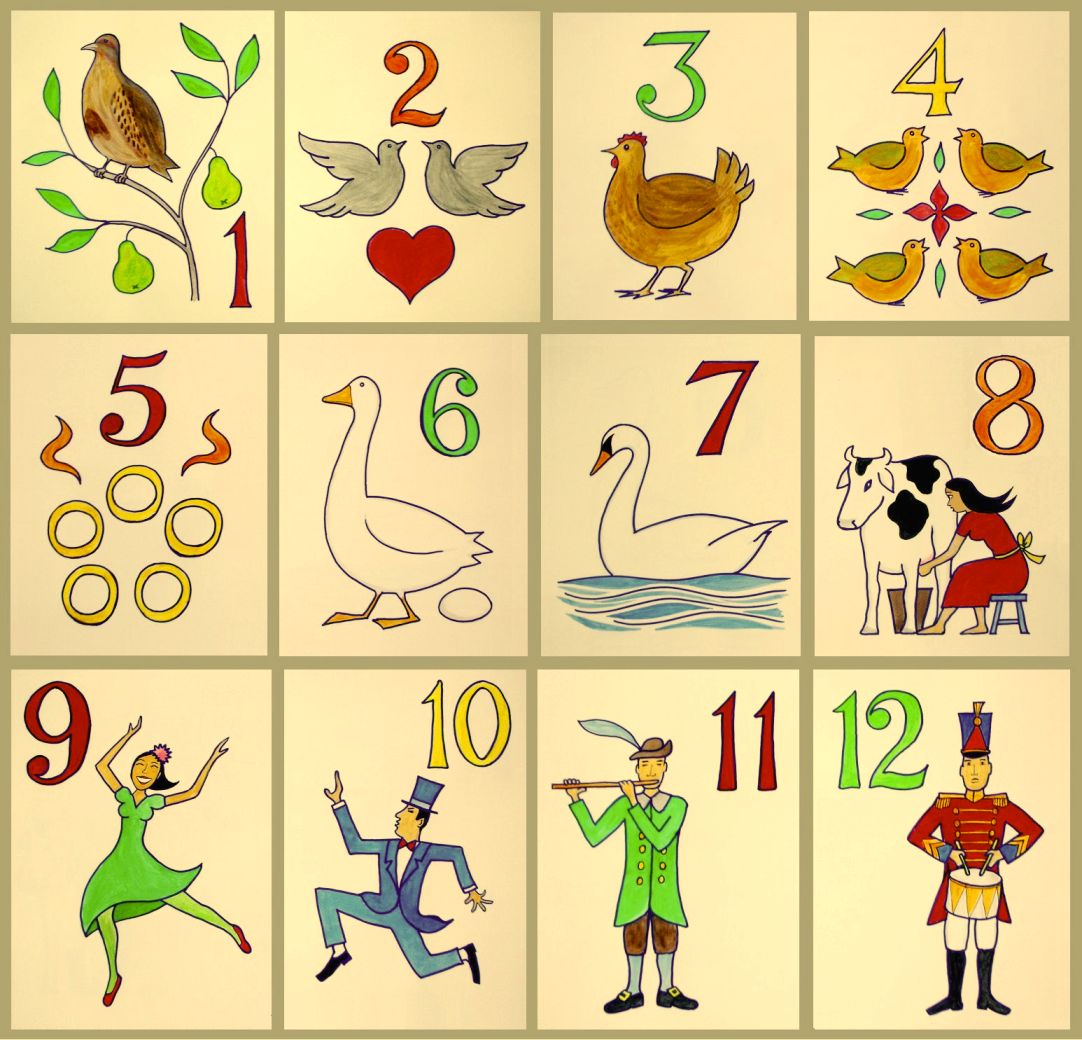
On the first day of Christmas my true love sent to me … a partridge in a pear tree.

The Twelve Days of Christmas is known to date back to the 18th century, though its origins are unclear, as is the significance of the things attached to each day. But we decided that for each of the twelve days, we would publish a new article about one of the 12 things.
“A partridge in a pear tree”
The first day’s gift is particularly cryptic. People have speculated that the partridge symbolises the self-sacrifice of Christ, because the partridge will feign injury to draw predators away from its chicks. The ‘pear tree’ may be a mishearing of the French ‘perdix’ which means partridge. Or, it may be about long life or constancy – there is an old saying, “You plant pears for your heirs,” because the trees are so long-lived. But nobody knows.
So, in the spirit of 2025, we thought we would ask Perplexity AI for a story about the partridge and its tree. Merry Christmas.
The girl and the partridge
The partridge had chosen the tallest tree in the orchard, a venerable pear with a hollowed heart and a crown that leaned slightly towards the lane. The old tree stood apart from the apples, as if it remembered a different country and climate, and on a cold December afternoon, its bare branches held only mistletoe, and one small, determined bird.

He had not meant to roost so high. All autumn, he had kept to the rough grass and the hedge-lines, to the safety of the low, tangled brambles. But the orchard had grown noisier. Strangers came with maps and clipboards, walking the rows and pointing at trunks. One of them had knocked with a boot at the mossy bole of the pear, as if testing a door. So, on the first hard frost of winter, the partridge fluttered up from the ground to the first branch, then the next, climbing the tree in a series of short, surprised flights, until he found himself looking down on the whole field.
From there, he could see everything – the sheep worrying the fallen apples to brown paste, the rooks rising in a ragged cloud from the ash by the stream, the faint thread of road where the village began. He could see the house, too, with its chimney just showing over the hedge, and the thin column of smoke that meant the day was closing. Sound reached him differently from this height. Twigs creaked under his feet and the wind printed its fingers along the pear tree’s branches, but the distant human voices became softer, like water poured from a jug.
When the girl came into the orchard, he saw her before he heard her. She walked slowly, one hand trailing along the flaking bark of each tree as though counting them. She stopped beneath the pear and tilted her head back, surprised to find a bird where she expected only bare sky.
“You’re new,” she said, though the partridge had been there all afternoon. Her breath clouded in the air between them. “This one’s meant to be perry, you know. They planted it for their heirs and forgot the heirs.”
She spoke the way some people pruned – cautiously, with a sense of apology. The partridge shifted, unsure whether to vanish downward in a burst of wings or hold his ground. The branch dipped and steadied. The girl smiled, as if he had answered.
“They’ll cut most of these,” she went on. “Car park, they say. But this one…” She laid her palm against the trunk. “This one’s hollow. That makes it important. Things live in old wood.”
The partridge did not understand words like ‘survey’ or ‘biodiversity’, but he understood edges – the edge of a hedge where cover ended, the edge of a field where stubble gave way to plough, the edge of a life lived too far from hiding places. This orchard was an edge now, an island of rough grass and tangled roots between tidy houses and neat, clipped lawns. From his place in the pear tree, he could see how small it really was.

The next week the men came back with their pegging-out lines and rolled plans. The girl came too, early, before the others, and hammered a small, discreet sign into the ground by the pear: “Veteran Tree – Do Not Remove.” She stood for a long moment beneath the partridge, hands thrust into her pockets, as if waiting for a verdict.
He gave her what he had – he stayed. When the men walked the boundary and muttered about sight lines and turning circles, the partridge remained, a compact, living punctuation mark against the winter sky. One of the men pointed up and laughed, saying, “Look at that, like the song”. Another, the one holding the plan, shrugged and adjusted his plan so that the hatching for tarmac stopped just short of the canopy’s dripline.
Snow came that year before Christmas, laying a thin, luminous skin over the grass and softening the sharp ruts of tractor tyres. The orchard held its breath. The apples were long fallen, the mistletoe thick as knotted rope, and the pear tree stood alone, with its hollow trunk and its single, stubborn bird.
From the lane, if you pass at dusk when the lamps in the new houses are only just blinking on, you might not notice the orchard at all. But if you stop, and look between the posts of the new fence, you will see one tall tree standing slightly apart, and in its highest fork, a small shape, rounded against the cold. Whether you thought of a carol or an old proverb about pears planted for heirs, you would feel – as the girl did when she came with her notebook – that something here had chosen to remain.
And so, the partridge in the pear tree became part of the plan – a symbol no one had intended, a mark on a drawing, and a watchful presence above the last rough grass in a changing village.
More from East Anglia Bylines


Friends of Bylines Network
There has never been a greater need for grassroots journalism that investigates the stories that really matter, holds power to account and champions the voices of everyday citizens. We are proudly powered by volunteers but what we do isn’t free.
STAND WITH US for independent, citizen-led journalism that makes democracy stronger, and you will even get some exclusive benefits.