One of the most surprising and shocking revelations we have discovered at East Anglia Bylines over the past two and a half years was how those old families, often dating back to the Conquest, still hold sway over our lives, still pull the strings in what we sometimes like to think of as our democracy. We discovered the story by accident whilst pursuing something else, and it was Stephen McNair who realised its significance and explained it in this excellent article. This article was first published on 20 June 2023.
The Stately Homes of England, how beautiful they stand
Noel Coward
To show the upper classes have still the upper hand
The Conservative Party is one of the oldest political parties in the world. It has survived by its flexibility: radically changing its policies and leaders from time to time in order to retain power, despite fierce internal quarrels. But its roots, deep in the British state, go back long before the formation of the Party in 1834.
One illustration of this is the continuing influence of families like the Hertfordshire Cecils and Grimstons, exerted through obscure organisations who continue to donate funds to Conservative causes and individual MPs, including four in our region.
The Stalbury Trust
The Stalbury Trust is one such organisation. It is a private limited company, with assets of £1.3mn when it last submitted accounts to Companies House, in 2004. In that year it had an income of £150,000 (on which it paid tax of £1,000).
Its (2007) memorandum of association states its purpose as:
“The promotion of the Conservative Party, the Conservative cause, and Conservative Principles and policies in such a manner as the Company thinks fit, and in particular to support any association, club, society, institution or other body … in the United Kingdom or throughout the world”
The trustees are not among the larger donors to the Conservative cause, but they seem to be reliable ones. During the 2019 election campaign they donated £220,000 to 51 Conservative constituency parties, 17 of them in the East of England.
In the last year they donated £5,000 each to four constituencies in the Eastern region, all with Conservative majorities of under 15,000. They are:
- Norwich North – Chloe Smith
- Ipswich – Tom Hunt
- Thurrock – Jackie Doyle-Price
- North Norfolk – Duncan Baker
Another such body is the United and Cecil Club, founded in the 1880s by supporters of the 3rd Lord Cecil. In the 2010-15 parliament they donated £712,000 to the Conservative party, making them the seventh largest donors to the Conservative party, and in 2019 were the largest donors to the ten most marginal constituencies.
Both Stalbury and United and Cecil donate mainly through donations of less than £7,500 to each constituency, thus keeping them below the level which must be publicly declared.
The ancestry: Cecils and Grimston
Two ancient families lie behind Stalbury: the Cecils and the Grimstons. The trust’s three directors are: Robert Gascoyne-Cecil, the 7th Marquess of Salisbury; his brother, Lord Charles Cecil; and their neighbour in St Albans, John Grimston, the 7th Earl of Verulam.
The Cecils have been at the heart of the British state for over 400 years. Their home, Hatfield House, is one of the finest houses of the Jacobean period. It was built by Robert Cecil, a close adviser to Elizabeth I and James I, who made him the 1st Earl of Salisbury. By careful manoeuvring the family remained influential through the Civil War and the restoration, and in the 1780s James Cecil, who had held a series of senior government posts was made 1st Marquess of Salisbury. His son, James Gascoyne-Cecil, and his successors were all educated at Eton and Oxford, and with the title Viscount Cranbourne (the title of the eldest son) most became MPs before inheriting the marquessate and moving to the Lords.
All have held senior government posts, most notably the 3rd marquess, who was prime minister for 13 years in the late 19th century. In 1900, his cabinet included six members of his own family, and he was succeeded as prime minister by his nephew, Arthur Balfour (the origin of the phrase “Bob’s your uncle”).
The 6th marquess, father of the current marquess, was a patron of the Salisbury Review, based around the view of the 3rd marquess “the political vision … that good government consisted in doing as little as possible.”

Like his six predecessors, the present (7th) marquess served as a Conservative MP before he inherited the peerage. Like several of his ancestors he became Lord Privy Seal and leader of the House of Lords. In 2020 the Sunday Times Rich List estimated his net worth as £335mn. In 2017 he retired from the Lords, and for the first time since the reign of Henry VIII, there was no Cecil in either House of Parliament.
His brother, Lord Charles Cecil, is director of 22 companies. He manages the extensive family estates, amounting to over 10,000 acres, in Hertfordshire, Dorset and central London, through a series of offshore companies.
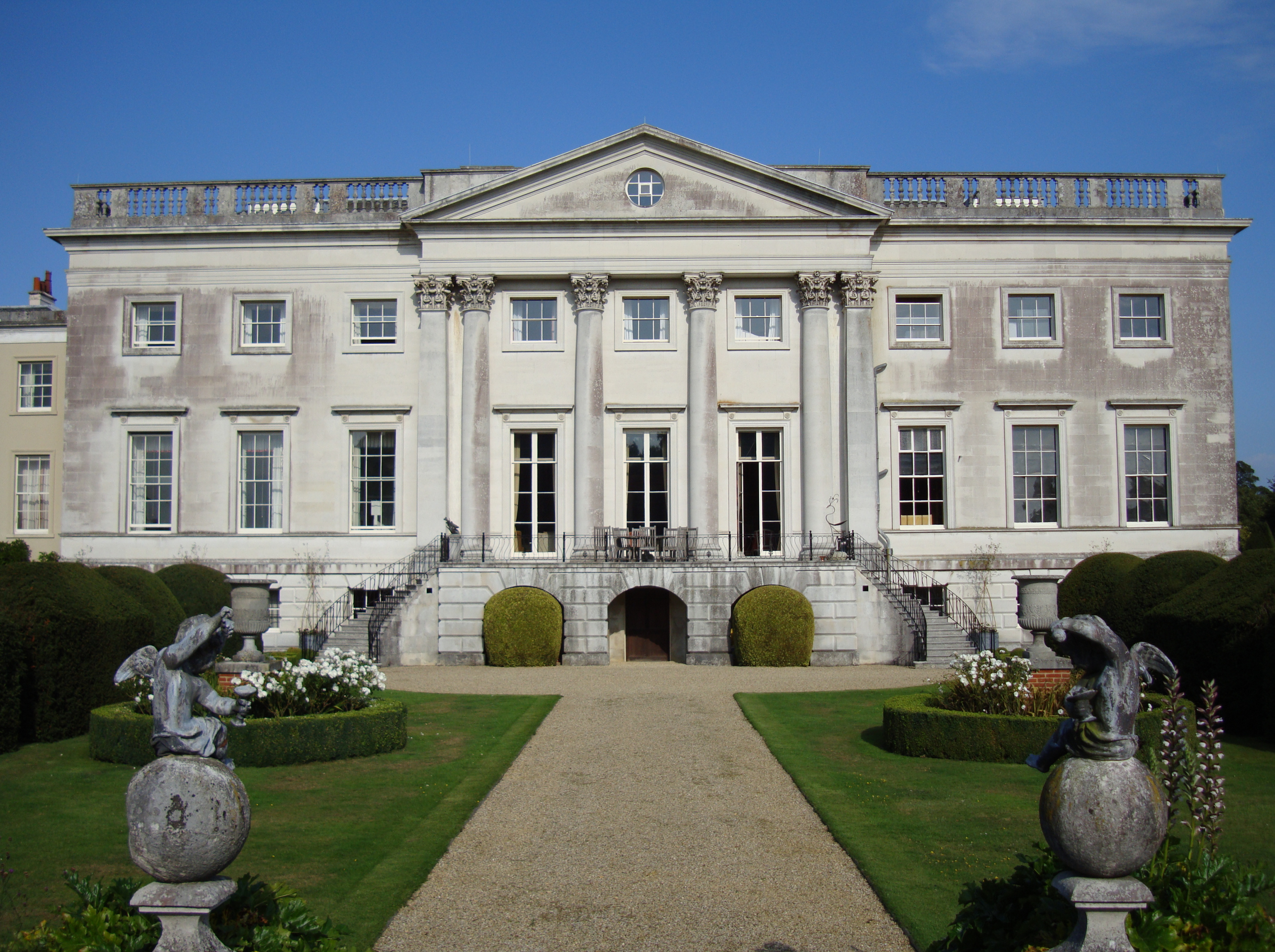
The third director of Stalbury is John Grimston, Lord Verulam, whose home is Gorhambury House in St Albans. He is a merchant banker, valued in the 2009 Times rich list at £32mn. The family has roots in the Anglo-Irish aristocracy of the early 18th century, but they also held estates in St Albans, where nine of his ancestors were MPs. In the 20th century they had interests in engineering, oil and telecommunications. The present Earl holds titles in England, Scotland, Ireland, Great Britain and the United Kingdom.

The secretary to Stalbury trustees is Ulric Barnett, another banker, distantly related to Verulam.
For centuries, these two families have been both extremely rich, but also extremely influential, in causes including the Union of the United Kingdom, the British Empire, and most recently in Brexit.
The Cecils and the Union
The Cecil family association with the Union can arguably be traced back to 1604, when Robert Cecil played a central part in ensuring that King James VI of Scotland become James I of England.
The 3rd marquess broke with Gladstone to oppose Irish Home Rule, and won a general election with the Liberal Unionists. The current marquess (the 7th) resigned from a government role because he opposed John Major’s policy of ‘rolling devolution’ in Northern Ireland, and he retired from the Commons in protest at the Good Friday Agreement. In 1997 he hosted a ‘unionist unity conference’ at Hatfield in an attempt to agree a common Unionist response to what became the Good Friday Agreement.
He now chairs the cross party Constitution Reform Group, set up to resist threats to the survival of the United Kingdom. They have proposed a new Act of Union, which would formally reconstitute the UK as a federal entity, with a new English parliament.
Empire and Brexit
The Cecils have a long connection with the Empire. The 3rd marquess founded Rhodesia, and named its capital after himself (Salisbury, now Harare). The 4th marquess fought in the Boer War, and was a leading opponent of home rule in India. As President of the Anglo-Rhodesian Society the 6th marquess was a strong supporter of white supremacy in Rhodesia and South Africa. He was also a leading supporter of the Conservative journal, the Salisbury Review.
The present marquess opposed sanctions against the white regime in Rhodesia. He now chairs the online journal Reaction and writes for the Spectator and the Policy Studies Institute. He was on the advisory board of the Eurosceptic think-tank Open Europe, one of the right wing think-tanks based in Tufton Street, Westminster, which is also the home of the European Research Group. Although he was suspected of being behind a secret donation of £435,000 to the Democratic Unionist Party in Northern Ireland to support the Brexit campaign, he has denied any involvement.
Lords
The House of Lords plays an important part in Britain’s constitution. It provides a (modest) check on the more extreme plans of particular governments. It includes many people who can bring substantial experience and expertise to bear on complex questions. But it is also ridiculously expensive, and extremely large, because prime ministers regularly add new members purely to secure a majority for legislation.

The Cecils have played a key role in the life of the House since Tudor times, and the Lords library has a room named after them.
The 5th marquess successfully ensured the survival of the Lords under the Clement Attlee government, by confirming the ‘Salisbury convention’, which prevents the Lords from opposing legislation which has been proposed in the government’s election manifesto.
When the Tony Blair government sought to reform the House of Lords, the present marquess led the opposition, and succeeded in negotiating (without consulting his party leader, William Hague) the agreement which retained 92 of the hereditary peers. In 2001 he took ‘leave of absence’ from the Lords in protest at new tighter regulations on the declaration of interests, and he retired from the Lords at the time of the 2017 general election.
The persistence of influence
There is no doubt that the Cecil family, and the Grimstons to a lesser extent, have managed to remain immensely rich and influential, at the heart of the British state for over 400 years. They have played an important part, for good or ill, in making the country what it now is. They continue to play a role, quietly, and apparently on a small scale, in supporting what they see as Conservative values.
How far those are in tune with the current Conservative Party is a moot point. But they have survived many changes of political fashion. The Cecils have managed to retain a central place in government through the absolute monarchy of the Stuarts, the Commonwealth, the Restoration, the Empire, and the welfare state.
They probably think they will outlive the present turmoil, and they may be right. The same can probably not be said for the MPs they currently support in our region.