• Contact
  • About
  • ISSN 3049-9771
  • Authors and editors
NEWSLETTER SIGN UP
East Anglia Bylines
Advertisement
  • HOME
  • News
    • Brexit
    • Health
    • Education
    • World
  • Politics
    • Local government
    • Justice
    • Activism
  • Climate
    • Environment
  • Lifestyle
    • Community
    • Culture
    • History
    • Humour
    • Property
  • Business
    • Development
    • Economics
    • Finance
    • Transport
    • Farming
  • ANGLIA
    • Bedfordshire
    • Cambridgeshire
    • Essex
    • Hertfordshire
    • Norfolk
    • Suffolk
  • Series
No Result
View All Result
East Anglia Bylines
Home Featured

The Little Drummer Boys – and some not so little!

The iconic drummer boy may seem a Christmas fantasy, yet history reveals courageous, young soldiers whose stories were as heroic as tragic

Jonathan Trigg by Jonathan Trigg
5 January 2026
in Featured, History, World
Reading Time: 7 mins read
A A
Drummers drumming: three drums being played by people in uniform. they are military drums, with an emblem, and ropes holding them together.

image by US Coastguard Academy. Public Domain, via Flickr

Share on Bluesky

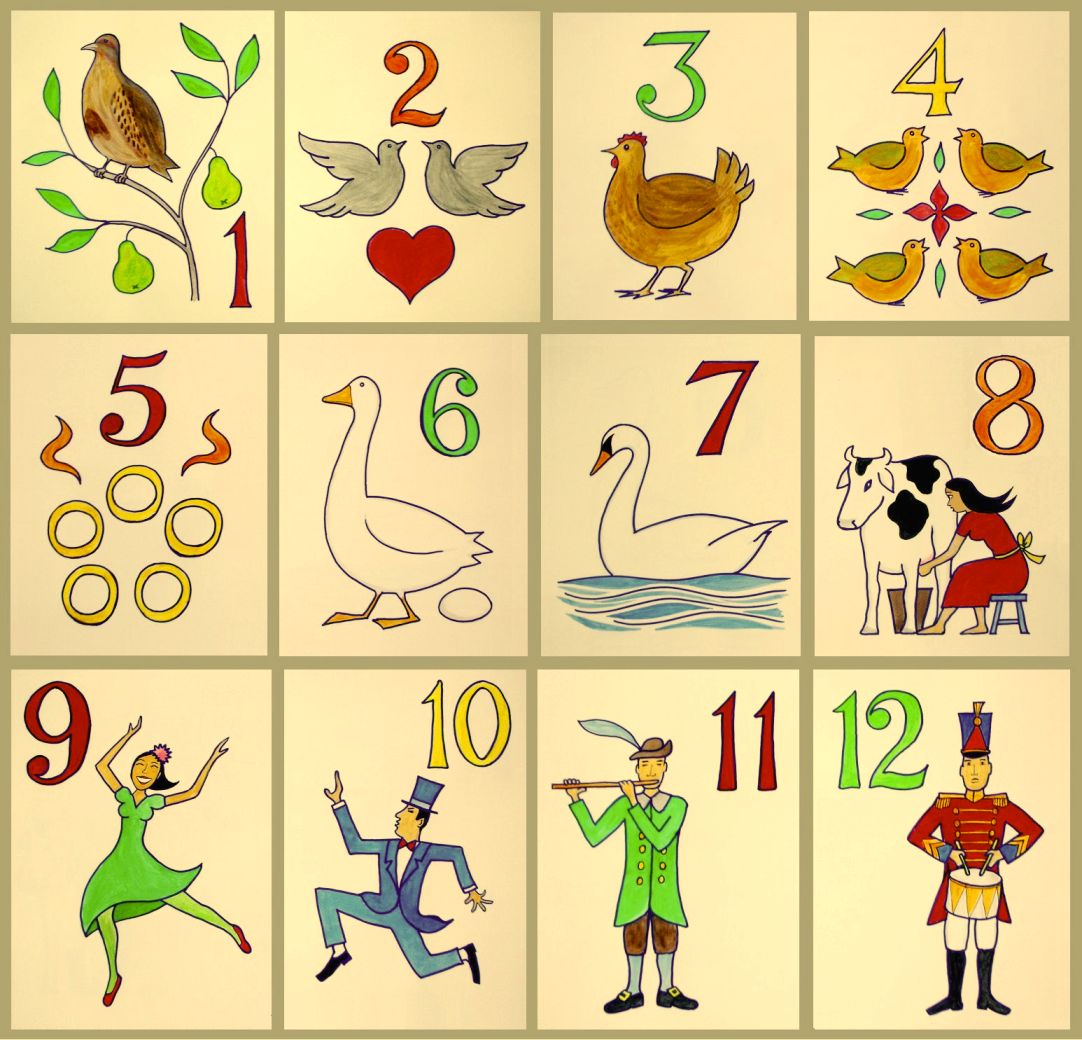
On the Twelfth Day of Christmas my true love sent to me … twelve drummers drumming

An illustration of the 12 days of Christmas
Image by Xavier Romero-Frias via Wikimedia Commons (CC BY-SA 3.0)

One of the most sung Christmas carols across the world is The Little Drummer Boy, penned in 1941 by an American music teacher, Katherine K. Davis. It was popularised by the radio in 1959, and Davis herself had no idea at first that it would become such a hit. But like all her music she donated the royalties in perpetuity to her local music college.

Come, they told me, pa rum pum pum pum
A newborn King to see, pa rum pum pum pum
Our finest gifts we bring, pa rum pum pum pum
To lay before the King, pa rum pum pum pum
Rum pum pum pum, rum pum pum pum.
So to honour Him, pa rum pum pum pum
When we come.

Davis once said the carol basically wrote itself. The image it evokes of a small, tousle-haired boy in a military uniform beating the drum is one that has been celebrated in paintings, songs and poems down through the centuries. But is the image true or a romantic invention?

The Chinese were the first to use drummers in their armies. It was the Ottoman Turks who brought the concept to Europe as they swept into the gates of Vienna in 1683. Mostly the drummers were there to keep the men marching in step as they moved from camp to camp. But on the battlefield, they were a vital means of communicating orders such as ‘Advance!’, ‘Retreat!’, ‘Wheel left!’ and so on, above the noise and bluster of battle. Soon every army adopted the idea and drums and pipes were as common a sight as flags and banners.

The death of Joseph Bara - painting by Charles Moreau-Vauthier. The boy is in uniform but with his feet to the left of the picture bare. He is stretched out on the ground, his right hand still clutching his drum
The death of Joseph Bara. Image by Charles Moreau-Vauthier. (CC0) via Wikimedia Commons

The romance and tragedy of youth

Tales of loyalty and courage under fire were associated with the drummers from the very start and were often tied to the extreme youth of the drummers themselves. Joseph Bara was just 14 years old when he supposedly was killed in battle by French royalists in 1793 in the Vendée, defiantly shouting ‘Long live the Republic!’ as he fell. His sacrifice was immortalised in a painting by Charles Moreau-Vauthier, and his body is interred in the Panthéon in Paris.

As for Johnny Clem, he was aged just nine when he ran away from home to join the Union Army as a drummer boy. He won fame at the Battle of Chickamauga in 1863, where he shot dead a Confederate officer. Drummers were just as much a target in battle as anyone else and many would fire a rifle as much as beat a kettle drum. Clem would eventually retire a general half a century later. Even younger was Nathan Futtrell, a seven-year-old who joined the militia to fight the British during the American War of Independence.

Johnny Clem, Boy Soldier in Blue: photo in an oval metal frame. He looks about 6 and is searing full uniform with a leather strap to carry his drum.
Statue of a drummer boy, Woodbridge.
Johnny Clem, Boy Soldier in Blue. Image by TradingCardsNPS (CC BY 2.0) via Wikimedia Commons| Drummer boy, Woodbridge. Image by Tripadvisor, used with permission.

Britain’s boy drummers

As for dear old Blighty, the British Army employed its fair share of drummer boys. Thomas Flynn, aged 15, was wounded playing his drum during the 1857 Battle of Cawnpore. Despite his injuries he bravely carried on and was awarded the Victoria Cross. He is still the VC’s youngest ever recipient.

However, in the popular mind of the British public, perhaps the most famous depiction of a drummer boy is in the 1979 blockbuster, Zulu Dawn, about the Battle of Isandlwana in 1879. In the film the Zulu impi attacks the British camp and a desperately young blond haired drummer boy is accidentally killed by British fire as he helps lay out range markers.

The Battle of Isandlwana, 22 January 1879. Among the adult soldiers is a small boy, in full uniform but bareheaded
The Battle of Isandlwana, 22 January 1879. Image by Charles Edwin Fripp. (CC0) via Wikimedia Commons

The famous last stand painting of the battle by Charles Edward Fripp also depicts a young blond drummer boy standing in the doomed redcoat square. The problem with this image is that the youngest drummer killed in the battle was aged 18. And ever since they were first introduced into the British Army, the vast majority of drummers were adult volunteers just like any other soldier.

That truth, however, has never tarnished the popular image, including in Norfolk where the legend of the Potter Heigham drummer boy lives on. One February night in 1815, as the story goes, a drummer boy home on leave tried to cross the wherry’s ice to meet his sweetheart only to fall through and drown. As Ernest Suffling wrote: “Only his ghost kept the appointment with the waiting girl.”

Mary nodded, pa rum pum pum pum
The ox and lamb kept time, pa rum pum pum pum
I played my drum for Him, pa rum pum pum pum
I played my best for Him, pa rum pum pum pum
Rum pum pum pum, rum pum pum pum.
Then He smiled at me, pa rum pum pum pum,
Me and my drum
Me and my drum
Me and my drum
Me and my drum


More from East Anglia Bylines

Band of the Welsh Guards marching in London
Culture

Bold as brass

by Dr Tom Almeroth-Williams
4 November 2024
6 aircrew from flight DT804
Community

Wartime hero commemorated at Belgian remembrance and memorial dedication

by Brian Stone
9 November 2025
An underground bunker showing bunks on one side and servicemen dining on the other
Community

Lest we forget: scallywags, escorts and boltholes

by Stuart Burrell
8 May 2025
Black and white photo of 7 men in the Auxiliary Unit patrol
Featured

East Anglia’s fighters and saboteurs that were never needed

by Andrew Chatterton
8 May 2025

Infographics from Easyfundraising

We are registered with easyfundraising! 8,000 brands will donate to us for free every time you use it.

It’s super quick and easy to SIGN UP, and will never cost you anything whatsoever. It’s FREE for you and HUGE for us!

Tags: 12 Days of ChristmasChristmasMusic
Previous Post

Inside MAGA’s worldwide campaign to undermine climate science

Next Post

Putin: a collaborative analysis with ChatGPT

Jonathan Trigg

Jonathan Trigg

Essex historian Jonathan Trigg is an author and broadcaster and has written extensively on the Second World War. He is an expert on foreign volunteers in the armed forces of the Third Reich. His books include Death in Derry: Martin McGuinness and the Derry IRA's War against the British. and D-Day Through German Eyes which was featured in this podcast. Available in Waterstones or online on Amazon.

Related Posts

German radio operator WW2. This is a display in a museum in the Ardennes about the 1945 Battle of the Bulge. It shows a soldier sitting at a desk with a telephone attached to the wall, and a radio on the desk. It has wires coming from it to something in his hands - he is probably transmitting in Morse code.
Cambridgeshire

The Nazi spy at large in Cambridgeshire

by Stuart Burrell
8 November 2026
Farage creeps away. He is tip-toeing away from a signpost that points in 3 different directions: Westminster and Clacton towards the left and, towards the right, 'Away', which is the direction he's going in.
Featured

Farage is a firebrand

by Helen Forte
6 November 2026
Woodcut of 3 witches on broomsticks flying with the middle one depicted as a devil heading towards a lady.
Culture

The magic hidden in our homes: six centuries-old ways to ward off evil

by East Anglia Bylines
31 October 2026
Old Glory Molly lined up in the dark to process. They are wearing dark clothes and carrying torches which throw light onto the bare branches above them. At the front of the procession is a plough dressed with cloths.
Culture

Glory be! The magic of Molly dancing cheers a winter evening

by Kate Viscardi
25 October 2026
A cash machine screen displays the warning “This ATM is out of service” above an alert symbol, with the instruction “Do not enter your PIN” below.
Technology

The LAMP is flickering

by Ben Smith
22 October 2026
Next Post
Vladimir Putin sitting next to the Russian flag.

Putin: a collaborative analysis with ChatGPT

SUPPORT OUR CROWDFUNDER

Tags

Activism Brexit Cartoons Christmas Climate Community Conservation Conservatives Democracy Economy Elections Environment EU Farming General Election 2024 Government Health History Housing Labour Letters Local government Net zero NHS Norwich Opinion Our place in Europe Party politics Pecksniff Politics Polling Pollution Poverty Reform UK Renewables Sewage Social care Something for the weekend Tax Trump Ukraine Voting Wealth Wildlife Women
East Anglia Bylines

We are a not-for-profit citizen journalism publication. Our aim is to publish well-written, fact-based articles and opinion pieces on subjects that are of interest to people in East Anglia and beyond.

East Anglia Bylines is a trading brand of Bylines Networks Limited which is separate to, but allied with, Byline Times.

Learn more about us

No Result
View All Result
  • About
  • Authors and editors
  • Complaints
  • Contact
  • Donate
  • Letters
  • Privacy
  • Network Map
  • Network RSS Feeds
  • Submission Guidelines
  • Download the Bylines Network App

© 2021-2026 East Anglia Bylines. Powerful Citizen Journalism. ISSN 3049-9771

No Result
View All Result
  • HOME
  • News
    • Brexit
    • Health
    • Education
    • World
  • Politics
    • Local government
    • Justice
    • Activism
  • Climate
    • Environment
  • Lifestyle
    • Community
    • Culture
    • History
    • Humour
    • Property
  • Business
    • Development
    • Economics
    • Finance
    • Transport
    • Farming
  • ANGLIA
    • Bedfordshire
    • Cambridgeshire
    • Essex
    • Hertfordshire
    • Norfolk
    • Suffolk
  • Series

Newsletter sign up

Crowdfunder

© 2021-2026 East Anglia Bylines. Powerful Citizen Journalism. ISSN 3049-9771