As we hang mistletoe and holly and light our Christmas candles, few of us pause to think about these traditions, which stretch back into the mists of time. How did these pagan customs become entwined with Christian festivals? To answer that, we must travel back to early 7th century England and meet King Rædwald of Sutton Hoo fame – a ruler who bridged two worlds at a pivotal moment in history.
Rædwald lived in a time of change
Much of what is now England was Christian by the time the Romans left Britain at the beginning of the 5th century. But the subsequent waves of invading Jutes, Angles and Saxons replaced the fledgling religion with their own pantheon of gods, such as Woden, god of war, and Ēostre, goddess of spring. Only the most western parts of the British Isles held on to their Christian faith.

At the start of the 7th century, much of England had returned to being a land of pagan rituals. But by the end of that century, Christianity had fully returned – or at least that’s what the chroniclers would later claim.
A king caught between two worlds
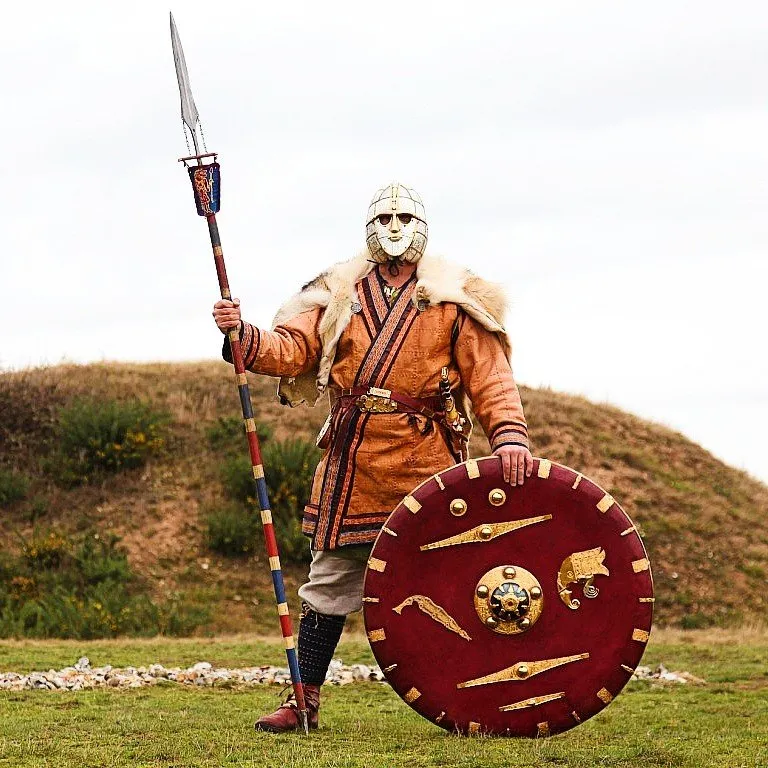
The reality was rather more messy. Conversion came slowly, marked by resistance and setback, compromise and a curious blending of old and new beliefs. At the heart of this transformation stood a man who embodied this duality: King Rædwald of the East Angles. He is believed to be the warrior from the Sutton Hoo ship burial in Suffolk. Rædwald’s religious conversion became a delicate balancing act between two faiths.
Our principal historical source on Rædwald is Bede, the monk whose writings illuminate the twilight years of pagan England and the dawn of Christianity. His Ecclesiastical History of the English People, written a century after the king’s death, gives us an invaluable window into this turbulent time during what historians used to call ‘the Dark Ages’.
Rædwald ruled East Anglia, a kingdom covering Norfolk and Suffolk, from 599CE. At that time, England was a patchwork of small kingdoms. His immediate neighbours were Sæberht ruling in neighbouring Essex and Æthelberht in Kent. Each kingdom was fiercely independent and steeped in pagan traditions.
Rædwald lived at a crossroads of history. It was a time when Christianity, brought by missionaries from Rome, was just beginning to take root again in the Anglo-Saxon-held lands.
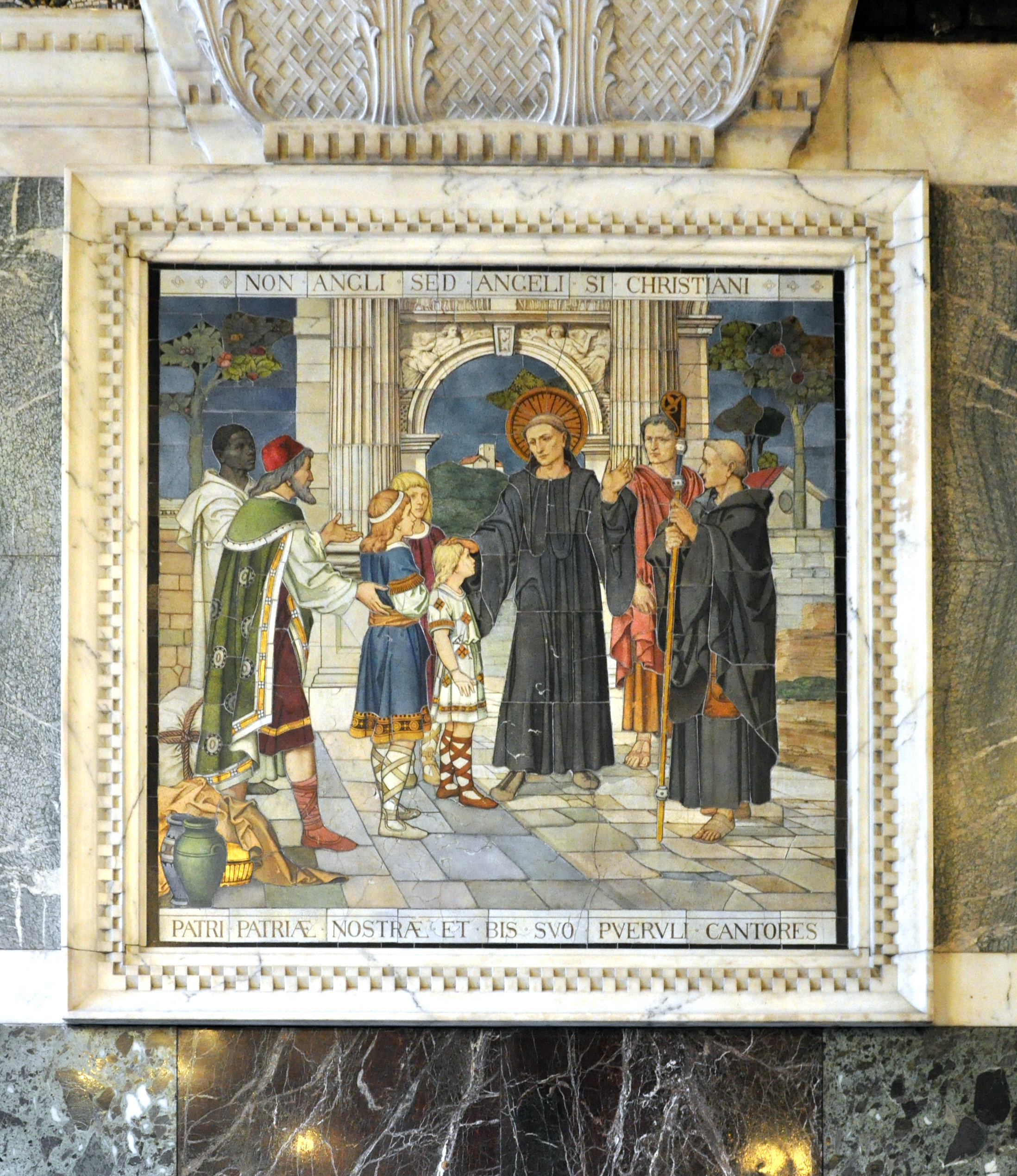
Pope Gregory, who sent St Augustine to England in 597CE, had advised missionaries not to destroy pagan temples. According to Bede, the Pope told them to transform these sites into Christian ones. They were to build altars, remove any pagan idols and replace them with Christian relics.
This pragmatic approach was in order to avoid building new churches which was costly. A secondary benefit allowed the repurposed temples to provide a familiar backdrop for the recently converted, seamlessly weaving the new faith into the fabric of existing Anglos-Saxon culture.


Rædwald‘s uneasy journey
Rædwald’s journey toward Christianity began at the court of Æthelberht, the king of Kent. Æthelberht was one of the first Anglo-Saxon kings to convert, influenced by his Frankish Christian wife, Bercta, and the efforts of Augustine’s missionaries.

While it’s not entirely clear from Bede’s writing, Æthelberht was probably ‘overlord’ to both Rædwald and Sæberht in Essex – a higher-ranked king among the Anglo-Saxons. It was while in Kent, perhaps as early as 604, that Æthelberht commanded both Rædwald and Sæberht convert to Christianity and be baptised.
For Rædwald, the stakes were high. Fully embracing Christianity might strengthen his ties with Æthelberht, as well as other Christian rulers. With regular battles fought between the various Anglo-Saxon kingdoms, allies were important.
Rædwald returned to East Anglia carrying Christian sacraments, and the vow to convert his people. For a king whose power relied on the loyalty of his warriors, he may well have felt conflicted on what he was about to demand of them. Anglo-Saxon warrior culture was deeply rooted in pagan beliefs. After all, Woden had served them well when their ancestors had successfully conquered much of England.
Paganism thrived in a warrior culture where glory in battle and honour in death were paramount. Christianity, with its call to meekness, humility, and turning the other cheek, posed an existential challenge to this worldview. For Rædwald’s warriors, exchanging Woden’s battlefield blessings for the promise of eternal life wasn’t necessarily an easy trade.
A temple divided
With this in mind, it wouldn’t have surprised him on his return to find resistance, in particular, Bede recounts, from his wife. Rædwald’s solution was unconventional. Instead of converting his temple into a church, he placed two altars in it: one dedicated to Christ and the other to the old gods.
An outraged Bede wrote of this:
“He seemed to be serving both Christ and the gods whom he had previously served; in the same temple he had one altar for the Christian sacrifice and another small altar on which to offer victims to devils.”
In his account, he went on to condemn this decision as a lack of commitment, calling Rædwald a ‘half-hearted convert’. But perhaps Rædwald understood something deeper about his people. This ‘blending’ of Christian and pagan practices offered a bridge between worlds. It allowed him to keep his Christian faith, while being a way for his subjects to ease into the new religion without completely forsaking the old traditions of their ancestors.
Traces in the Suffolk landscape
Archaeological evidence suggests the site of Rædwald’s famous temple was at Rendlesham in Suffolk, where St Gregory’s Church now stands. If so, it is a fitting symbol of the transformation Rædwald embodied. The pagan shrine, with its dual altars, would have been replaced by a Christian church, mirroring the gradual shift in beliefs across the kingdom.

Just as Rædwald placed Christ and the old gods side by side, as Christianity took a firm hold, pagan customs were woven into new rituals. They are still evident in many Christmas traditions today: decking the home with ivy garlands, burning Yule logs, feasting and wassailing; all have their roots in pagan midwinter celebrations.
In early 616CE, the two Christian kings died: his overlord, Æthelberht and his neighbour, Sæberht. Their sons took their kingdoms back to paganism. The only royal Christian altar in Anglo-Saxon England belonged to Rædwald.
An unwitting kingmaker for England’s faith
Later that year, in his most famous battle, Rædwald defeated Æthelfrith, king of Northumbria, at the Battle of the River Idle. This victory put Edwin, an ally, on the Northumbrian throne. On the death of his father, Edwin had sought shelter in Rædwald’s court after Æthelfrith had seized the lands that were rightfully his. This victory came to be a crucial moment in England’s Christian history that Rædwald could not have foreseen.
With the death of his overlord, his victory in Northumbria probably secured Rædwald’s position as a Bretwalda – ‘High King’ – among the Anglo-Saxons. For a short period until his death, Rædwald was the most powerful man in southern England, his influence stretching far beyond the borders of East Anglia.
Yet it was in religion, not warfare, that Rædwald left his most enduring mark in England’s history, and it came after his death in around 624CE. If the grave at Sutton Hoo is indeed his, then he chose for himself an elaborate pagan burial. It is no wonder that Bede accused him of being apostate, who wilfully turned away from Christ. But perhaps, as a ‘king of kings’, Rædwald felt it more fitting to honour the traditions of his ancestors than a faith about which, for most of his reign, he had held some ambivalence.
His son, Eorpwald, never converted and on accession to the throne, took the kingdom of East Anglia back to paganism. But that only lasted three years. Rædwald’s ally Edwin, who had only become king of Northumbria thanks to Rædwald’s support in battle, went on to become High King in turn. Around 627CE, he converted to Christianity and decreed that all the regions of his realm follow suit. After a faltering start, England was transformed, in no small part thanks to Rædwald.
This Christmas, as we deck the halls, burn Yule logs and light candles, we are taking part in a centuries-old tradition that Rædwald himself might have recognised. It’s a reflection on how old and new elements can blend together to create something timeless and enduring.

Share this article on Bluesky: