


The EU is caught in a dilemma between its geopolitical urge to enlarge and the high institutional standards for membership. Frank Schimmelfennig argues that differentiated integration would help square the circle. Committed candidate countries could join fast, but only enjoy full rights and benefits of membership conditional on institutional progress.
Geopolitical and transformative enlargement
Russia’s full-scale invasion of Ukraine in 2022 invigorated arguments for EU enlargement. In less than three years, Ukraine and Moldova have moved from no prospect of membership to the opening of accession negotiations. This is a new post-Cold War record. The EU has also begun accession negotiations with Albania and North Macedonia; Bosnia-Herzegovina and Georgia have attained official candidate status.
Developments in democracy and the rule of law have nothing to do with the new dynamism. Indeed, with the partial exception of Moldova, democracy and governance indicators for the candidate countries have long been moving sideways.
The recent reinvigoration of EU enlargement has been driven by considerations of military security and power rivalry over control of the European space
Rather, EU enlargement is reinvigorated because enlargement rationale has changed. Earlier rounds of Eastern enlargement were triggered mainly by, and conditional on, the democratic transformation of former communist countries. Recent advances, by contrast, have been motivated by geopolitics. They follow considerations of military security and great power rivalry over the control of the European space and order.
In her foundational post for this series, Veronica Anghel argued that the EU needs enlargement to manage collective security risks and gain international influence. Yet the EU’s official enlargement strategy has not followed this geopolitical shift. It is still based on the methodology last revised in 2020 for the Western Balkans. This methodology upholds – and even reinforces – the principles and procedures of transformative enlargement. The focus remains on the rule of law, the economy, democratic institutions, and public administration. The EU requires ‘irreversible achievements’ on these ‘fundamentals’. Steps toward accession are based on individual merit and ‘objective progress’ in liberal democratic transformation. They are not contingent upon how well countries resist Russian aggression and meddling.
Rather than pursuing a full shift towards geopolitical enlargement, the EU has engaged in strategic ‘layering’. After the geopolitically motivated start of negotiations comes the transformational accession process.
The enlargement dilemma
This layering creates a dilemma for EU enlargement – and could undermine its success. The democratic transition of Southeast and Eastern Europe has suffered from weak or informal institutions and generated entrenched state capture. The lack of credibility in the EU’s accession conditionality before 2022 did little to correct this development – and may even have reinforced it.
Since the mid-2000s, the region has ceased convergence with the old EU member states. In response, and considering democratic backsliding in several new member states, the EU introduced more rigorous political conditionality. Rigorous conditionality, however, makes it even harder for countries with burdensome political and institutional legacies to achieve quick and ‘objective’ progress. This is particularly the case when they face Russian military aggression, hybrid warfare, and election interference.
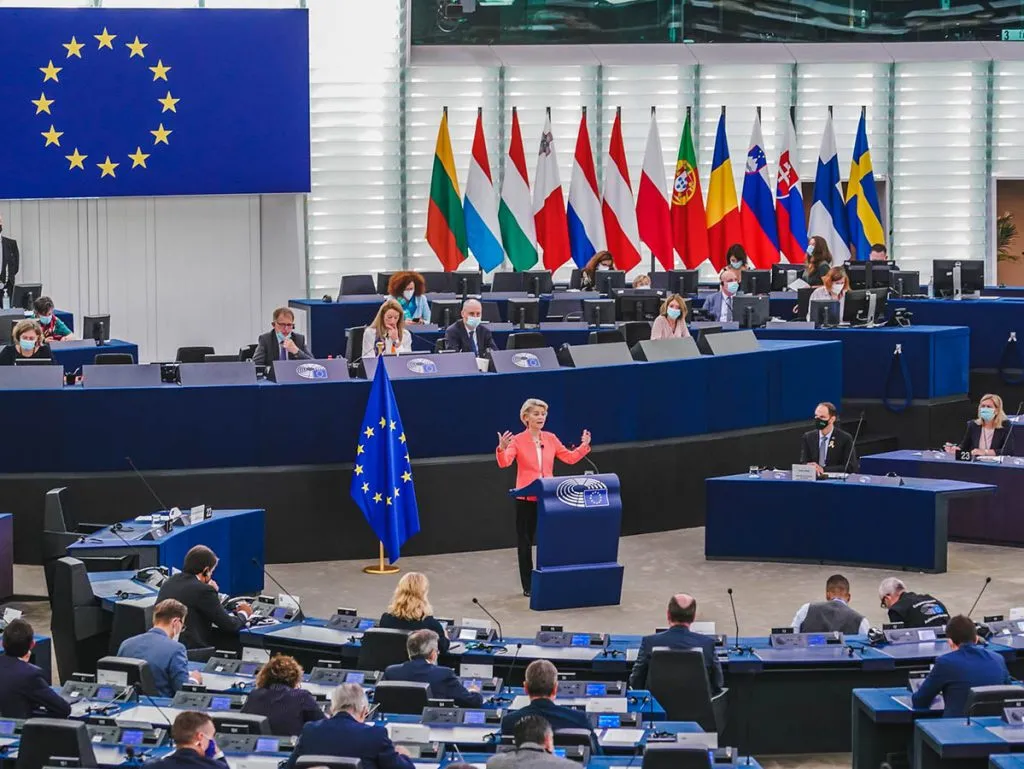
The EU’s offer of membership is now more credible and urgent than it has been for a long time. Even so, insistence on ‘fundamentals first’ and ‘irreversible achievements’ could still lead to protracted and stagnating negotiations. And that’s not even factoring in bilateral conflicts, such as the one between Bulgaria and North Macedonia currently blocking the actual start of negotiations. The likely consequences would be similar to what we have seen in the Western Balkans and Türkiye over the past 15 years: disappointment and waning public support for EU accession, strengthened illiberal and nationalist parties and leaders, and greater influence for the EU’s geopolitical rivals.
On the other hand, the EU cannot – and will not – simply do away with its value-based accession criteria to maximise its membership and deny its rivals control over adjacent territories. Liberal democracy is at the core of the EU’s identity, and enshrined in its treaties. Strong, independent public administrations and judicial systems are essential for the functioning of many common policies.
From gradual integration…
What are the options for mitigating the tensions between geopolitical and transformative enlargement? How can the EU reconcile security-based pressures for a fast and broad accession of countries in its neighbourhood with its liberal-democratic identity and institutional needs?
Fudging the accession criteria would be the worst solution. Instead, the EU could use and further develop its tools for differentiated integration. The current enlargement strategy already envisages ‘gradual integration’, allowing candidate countries to participate in specific EU policies before accession. The Growth Plan for the Western Balkans and the Ukraine Plan provide for increasing access to the internal market and EU funding, provided candidate countries adopt the relevant EU rules and build adequate administrative capacity. However, while gradual integration will help prepare candidate countries for EU membership, it does not include a roadmap for accession.
…to differentiated membership
Differentiated membership is an alternative. It would give candidate countries committed to the fundamental values of the EU and geopolitically aligned with it the membership status to which they aspire – even if their domestic institutions still suffer from significant deficits. At the same time, the new members would not be allowed to participate in all policies and enjoy the full rights and benefits of membership unless they create and meet the institutional conditions. In a shift from pre-accession to post-accession conditionality, they would thereby retain strong incentives to improve their institutions after becoming EU members.
Differentiated integration would give candidate countries committed to the fundamental values of the EU, and geopolitically aligned with it, the membership status to which they aspire
This would just expand standard practice. Accession treaties typically contain transitional arrangements, excluding new members temporarily from benefits such as the free movement of labour or agricultural subsidies. Moreover, the EU sets additional conditions for members to participate in specific policies such as monetary union and Schengen. Finally, the EU has developed a rule of law mechanism and conditionality to monitor the performance of current member states and place financial sanctions on backsliding. After all, liberal-democratic achievements are never irreversible – no matter how well-prepared countries seem when joining the EU.
This article is republished from The Loop under a Creative Commons license. Read the original article.
Share this article on Bluesky






