George Eustice, former Environment Secretary, yesterday broke ranks with the government line on the success in forging new trade deals post-Brexit. He portrayed the much lauded flagship deal with Australia as ‘not very good’.

Civil servant to blame?
Eustice, however, singled out one civil servant’s incompetence in negotiations. “Crawford Falconer, who is currently acting Temporary Permanent Secretary, is unsuitable for the position, in my experience,” he said during a Commons speech this week. “His approach has always been to accommodate Australian demands, often when they are against UK interests, his advice has always been to back off and make new concessions and all the while he resents people who understand technical issues more than he does.”
Despite his apparent misgivings, Eustice was himself a member of the cabinet which collectively agreed the deal in 2021, and that he had personally lauded as a success in Parliament at the time. The freedom of the back benches appears to have produced a Damascene conversion for Eustice, who now understands what many in the UK have come to realise about the post-Brexit sunlit uplands: they have been over-promised and over-sold.
What is the UK-Australian trade agreement?
The two countries signed a free trade agreement in December 2021, the first new deal signed since Brexit. The substantive effect is the removal of most tariffs on trade on a range of services and products. The government’s own impact assessment states the deal will increase UK GDP by 0.08% or £2.3 billion per annum by 2035. However, it is widely forecast to have an adverse effect on the agri-food sector in the UK. The UK farming community is seriously concerned about potential undercutting by Australian producers, who have lower production costs because of lower animal welfare and environmental standards. Others question the benefits of the agreement, given that trade barriers are already low. Total exports to Australia in 2019 were £191m; total imports were £249m (HMRC data).
Unjustifiable air miles
We are committed as a country to tackling climate change, and both countries have much closer markets. The export of perishable foodstuffs is expensive, and quality control is difficult over long distances. There are easier markets at hand for Australia – the South Pacific, Asia and China for instance.
Little benefit to UK farmers
The UK farming community’s principal objections relate to red meat production. The National Farmers Union (NFU), in response to the House of Commons International Trade Select Committee Enquiry in February 2022 raised the following concerns:
- no safeguards for beef and lamb against a surge of Australian imports from year 16 onwards;
- no safeguards on animal welfare or production standards;
- lack of reciprocity in benefit terms for UK meat producers as markets liberalise further and greater advantage for Australian producers;
- lack of clarity on decision making.
Overall, the NFU concluded that there is little in this agreement to benefit British farmers. Eustice has now admitted this in Parliament, but only by dint of deflecting responsibility for what is clearly a disastrous government negotiation onto senior civil servants.
And for Australian farmers?
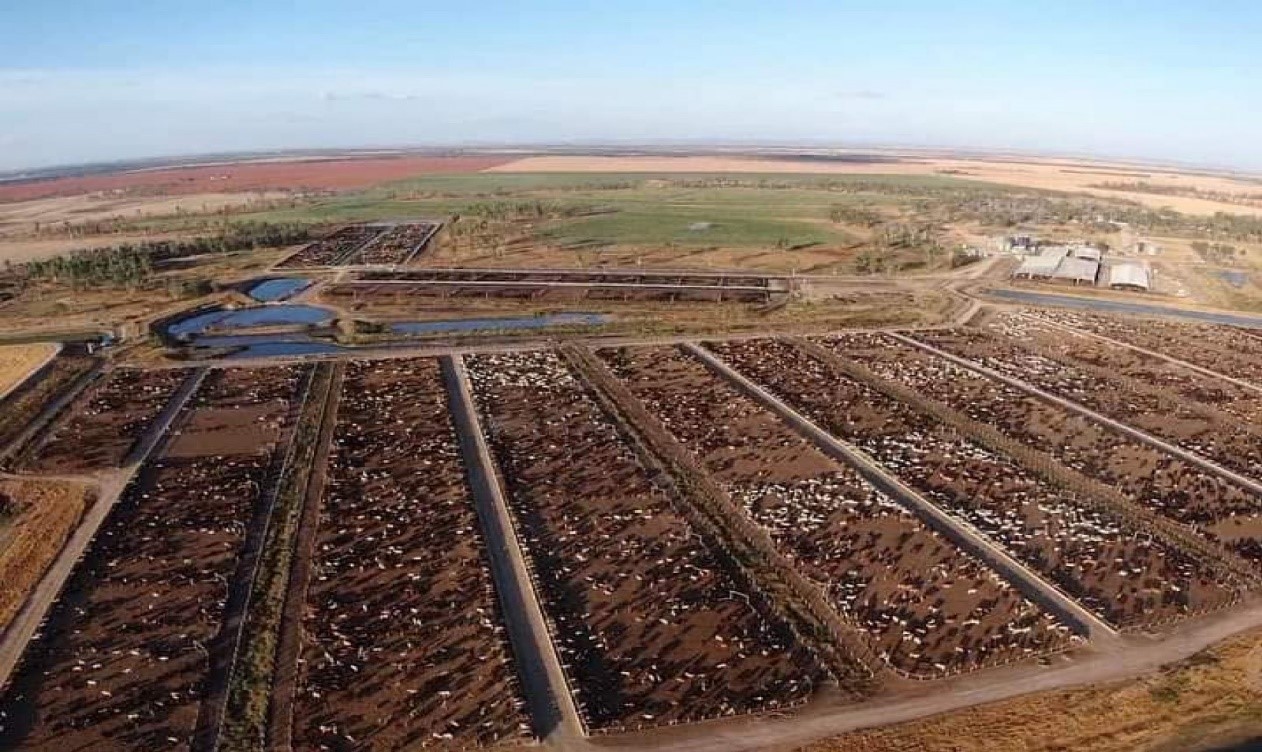
Substantively, it’s a very good deal. As one of the biggest agri-food exporters in the world, Australia produces more than it can consume. Exports alone generate more than double the UK beef sector. It controls 48% of the global sheep market.
Production costs are lower due to intensive, industrial scale operations, giving huge competitive advantage over the UK.

In their Select Committee response, the NFU conclude that “the government is asking British farmers to go toe-to-toe with some of the most export orientated and competitive farmers in the world, without the serious, long-term and properly funded investment in UK agriculture that can enable us to do so”.
Taking back control – or desperation?
On the face of it, the rush to demonstrate some kind of post-Brexit deal has created a significant risk to UK meat production: hardly ‘taking back control’. And while the UK praises the value of the deal, the NFU response reports that in November 2021 the Agriculture and Horticulture Development Board described Australia’s more pragmatic view: there were more attractive markets closer to home, but the UK deal could be useful as a fall-back position, should existing markets (e.g. China) decide to close off trade routes. Is the UK simply to be kept in reserve for a rainy day?
The office of the current Trade Secretary, Kemi Badenoch, has sought to reassure UK farmers by dismissing any threat to UK farming and any suggestion of incompetence by lead civil servants.
Threats to East Anglia
Agri-food production in East Anglia is dominated by cereals and pork, and local beef is not a significant proportion of total UK production. So our region is not particularly threatened by the UK-Australia agreement. The principle of a more liberalised market may threaten East Anglian agri-food sectors in the future, however. And the importing of lower-welfare meat is a risk to all British consumers. Do you know where the meat in your favourite profit-driven eatery is from?