• Contact
  • About
  • ISSN 3049-9771
  • Authors and editors
NEWSLETTER SIGN UP
East Anglia Bylines
Advertisement
  • HOME
  • News
    • Brexit
    • Health
    • Education
    • World
  • Politics
    • Local government
    • Justice
    • Activism
  • Climate
    • Environment
  • Lifestyle
    • Community
    • Culture
    • History
    • Humour
    • Property
  • Business
    • Development
    • Economics
    • Finance
    • Transport
    • Farming
  • ANGLIA
    • Bedfordshire
    • Cambridgeshire
    • Essex
    • Hertfordshire
    • Norfolk
    • Suffolk
  • Series
No Result
View All Result
East Anglia Bylines
Home Party politics

Beyond deliverism: Labour’s struggle with a new politics

The Labour government is delivering what people expected, but the voters aren’t responding. A new paper suggests this is a crisis for ‘deliverism’

Stephen McNair by Stephen McNair
8 April 2026
in Party politics, Politics
Reading Time: 6 mins read
A A
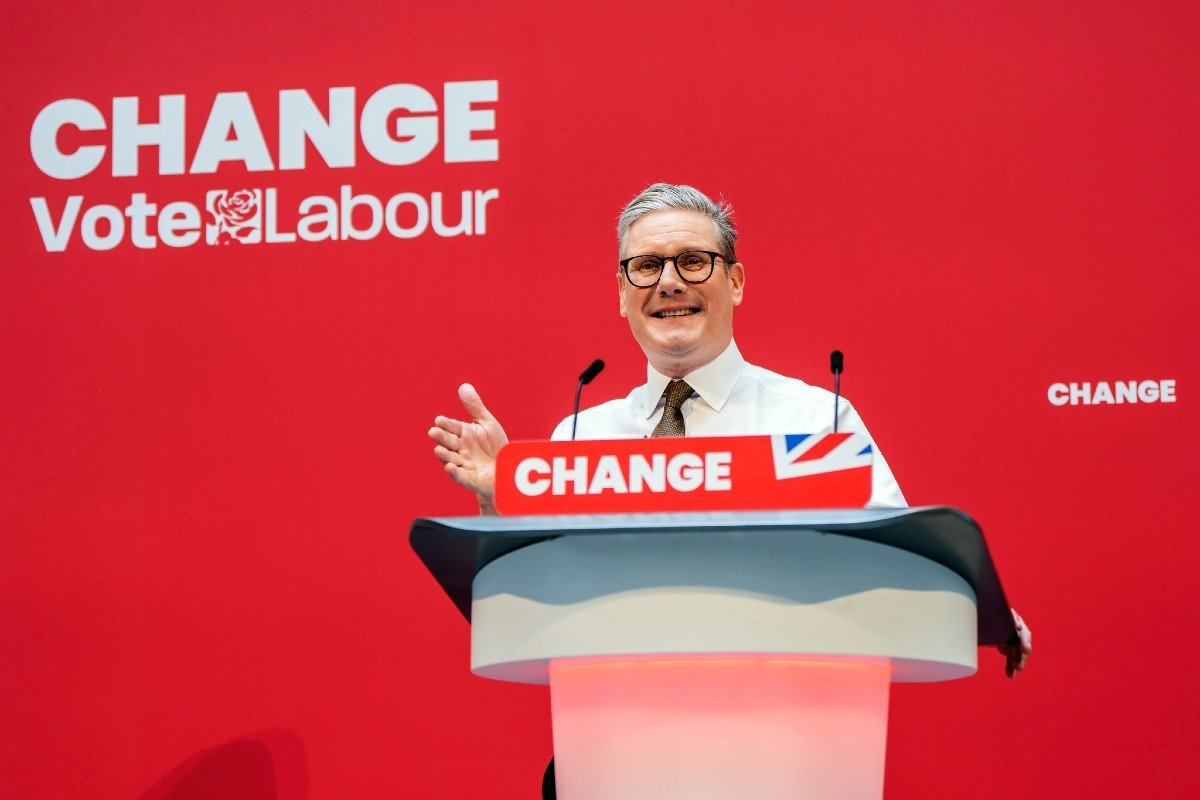
Keir Starmer giving a speech during the 2024 General Election campaign. Behind him a banner says "Change, Vote Labour"

Image by Keir Starmer via Flickr (CC BY-NC-ND 2

Share on Bluesky

What do people expect from a Labour government? Few people pay much attention to manifestos or election pledges, but there are some underlying expectations of political parties. Labour is expected to defend the rights of working people, to reduce inequality and to improve public services. And, despite promises, it will raise taxes to pay for these things.

This is probably what most people who voted Labour in 2024 hoped for. But a recent paper by David Klemperer at the University of Bath, suggests that voters are moving beyond ‘deliverism’ to a more visceral politics, where change matters less than stories.

What have they delivered?

The present government has a decent case that it has lived up to expectations. It has undertaken major legislation to give new rights to workers. It has taken 450,000 children out of poverty and introduced a host of small measures like breakfast clubs and limits on the cost of school uniforms to reduce pressure on the poorest, and it has protected the state pension. It is nationalising the railways and is reforming the energy and water industries. It has capped bus fares and embarked on a programme to reform the NHS.

Yet despite this, this government is unpopular at unprecedented levels. Keir Starmer’s poll ratings are the worst for any prime minister ever. Remarkably for such a self-effacing figure, the pollster Luke Tryl reports that in focus groups people often say they ‘hate’ Keir Starmer, though they can rarely explain why.

There have been obvious mistakes: an inheritance tax reform aimed at the very rich, which caught popular – and not very rich – farmers; and welfare reforms which had not been well-prepared for. Some of the blame can be attributed to Labour’s old enemy, a hostile print media.

And people had perhaps unrealistic expectations. After 14 years of static living standards, people hoped for rapid change, but major change takes time.

A crisis of delivery

So, what is going on? A recent substack article by David Klemperer from Bath University argues that the problem is a ‘crisis of delivery’. ‘Deliverism’ argues that voters reward governments that improve the economy and build policies that create loyal supporters.

This was the approach of the Biden government. The American Rescue Plan, the Inflation Reduction Act and Child Tax Credits raised jobs, wages and green investment. But, despite this, Biden remained unpopular, and Democrats lost the 2024 election. Many commentators asked why these programmes bought so little political benefit. The link between good policy and electoral reward seemed to have broken down.

Some claim that politics follows shared perceptions and online narratives more than people’s direct experience. Despite Biden’s strong performance on jobs and wages, voters had already decided against Biden, and were discounting those achievements. They were looking for reasons to reject him, and they focused on inflation, the failure to entrench new welfare entitlements and real cost‑of‑living problems.

Labour’s mixed approach

The Starmer government is following the same deliverist model, stressing making change that people can experience. And the party’s own communications emphasise that Labour is “delivering change”.

But, if people have lost faith in delivery and are increasingly preferring emotional “connection” over delivery, this no longer works. Unlike Polanski or Farage, Starmer does not ‘connect’ well, at least in public media appearances.

So, people’s frame has been set: they are no longer attending to what he is delivering, especially when it seems to affect other people. And this enables people already hostile, to attack him from two contradictory directions: both that he is obsessed with technocratic delivery and metrics, and that he focuses on public relations and chasing the polls.

The local and the national

Inevitably, people’s sense of the state of the nation is shaped less by their own experiences than by the information environment. In general people are much more positive about their own lives and locality, which they experience daily, than about the country as a whole, which they can only know about from the media – often hostile newspapers, right‑wing TV channels and social media filled with misleading or extreme content. And for commercial reasons online platform algorithms tend to amplify anger and sensationalism.

Economic stagnation and rising inequality driven by neoliberalism have produced a broad sense of unhappiness. Without confidence in the ability of government to improve things, people seek cultural affirmation or emotional release rather than unattainable material benefits.

And the problem is exacerbated by generational factors. The proportion of “post‑economic” voters, especially older people who own property and have secure assets, is rising. Shielded from job‑market shocks and more likely to vote, they care less about growth and unemployment and more about identity.

Delivery still matters

However, Klemperer argues that the anti‑deliverist battle is not lost. There is still strong evidence that what governments do affects how people see them, and that economic and social conditions can shape election results. In the UK, dissatisfaction clearly reflects austerity, Brexit and the handling of Covid. However, the link between delivery and political reward has become weaker and more complicated. Delivery is necessary, but it is no longer sufficient.

The centre‑left now needs to do two things at once: deliver material improvements and operate skilfully in the current media and political environment so that these improvements are visible, salient and emotionally meaningful. That means being clearer about what will be delivered, who to prioritise and what policies are hardest for inflation or hostile narratives to erode. But they need stronger stories and emotional appeal.

Parties need new approaches to social media communication, organisation both online and offline, more visible ways of implementing policy and stronger regulation to reshape media systems.

Klemperer argues that there are two “post‑deliverist” tendencies within this government. One is a deregulatory, growth‑first, media‑savvy “insurgent government” approach associated with the Labour Growth Group. The other is a place‑based, co‑operative “Pride in Place” approach that seeks to rebuild trust through tangible local change and shared decision‑making.

Neither offers a complete answer, but both might contribute to moving beyond simple deliverism in a tougher, more mediated political age.


More from East Anglia Bylines

Keir Starmer campaigning before the General Election, surrounded by people holding banners that say "Change"
Politics

Does Labour follow its old voters, or its old ideals?

by Peter Thurlow
25 February 2026
TUC Headquarters
Employment

Labour delivers on its promise to workers

by Stephen McNair
18 December 2025
Farage looking worried
News

Farage lashes out at YouGov as Reform’s poll lead fades

by Prof Paul Whiteley
28 March 2026
A newly excavated, muddy pond area containing a shallow pool of water, showing signs of recent conservation work. The clearing is surrounded by bare, turned-up brown earth, mature green trees, and low ground vegetation. In the background to the right sits a traditional black weatherboarded barn with a red tiled roof, separated from the clearing by a wooden fence.
Environment

Seven ponds set to reveal their hidden wildlife potential

by Rebecca Turner
8 November 2026
German radio operator WW2. This is a display in a museum in the Ardennes about the 1945 Battle of the Bulge. It shows a soldier sitting at a desk with a telephone attached to the wall, and a radio on the desk. It has wires coming from it to something in his hands - he is probably transmitting in Morse code.
Cambridgeshire

The Nazi spy at large in Cambridgeshire

by Stuart Burrell
8 November 2026
Tags: DemocracyMedia
Previous Post

Reform wanted Norfolk’s elections – its record elsewhere raises serious questions

Next Post

Norwich Community Gardens Festival: gardening all over the city

Stephen McNair

Stephen McNair

Stephen McNair is a member of the EAB editorial team, living in Norfolk. Now retired, he spent most of his career working on education policy, especially learning and work, at local, national and international level. He is Emeritus Professor of Education at the University of Surrey, and previously a Director of the National Institute for Adult Continuing Education. After 'retiring' he spent five years chairing a European research committee on demographic change.

Related Posts

Four slightly tilted panels showing the headquarters of Essex, Cambridgeshire, Norfolk and Suffolk county councils, each identified by its council logo, against a textured grey background.
Anglia

East Anglia’s council shake-up is back on – but a year later

by East Anglia Bylines
4 November 2026
Around 20 demonstrators outside Princess of Wales Hospital, Ely. Their banner reads 'No Palantir in the NHS'.
Activism

⁠Palantir under fire: the battle over its NHS role

by Aidan Baker
26 October 2026
Climate demonstration. Poster reads 'there is no planet b
Climate

Are we being told enough about the ecological collapse?

by Cllr Gary Champion
25 October 2026
A person holds a small model house and a set of keys in their outstretched hands
Business

Why this Tory obsession with inheritance tax?

by Prof Richard Murphy
20 October 2026
Woman holding an EU flag beside a large yellow bus emblazoned ‘Bollocks to Brexit – It’s not a done deal!’
Brexit

Another referendum on the EU? You must be joking

by Peter Thurlow
16 October 2026
Next Post
Alina Sandu with Community Garden volunteers. Alina is front right, taking the photo, and behind her are 8 volunteers standing on grass, with a stand of trees behind them and beyond that a fence and then a terrace of houses.

Norwich Community Gardens Festival: gardening all over the city

SUPPORT OUR CROWDFUNDER

Tags

Activism Brexit Cartoons Christmas Climate Community Conservation Conservatives Democracy Economy Elections Environment EU Farming General Election 2024 Government Health History Housing Labour Letters Local government Net zero NHS Norwich Opinion Our place in Europe Party politics Pecksniff Politics Polling Pollution Poverty Reform UK Renewables Sewage Social care Something for the weekend Tax Trump Ukraine Voting Wealth Wildlife Women
East Anglia Bylines

We are a not-for-profit citizen journalism publication. Our aim is to publish well-written, fact-based articles and opinion pieces on subjects that are of interest to people in East Anglia and beyond.

East Anglia Bylines is a trading brand of Bylines Networks Limited which is separate to, but allied with, Byline Times.

Learn more about us

No Result
View All Result
  • About
  • Authors and editors
  • Complaints
  • Contact
  • Donate
  • Letters
  • Privacy
  • Network Map
  • Network RSS Feeds
  • Submission Guidelines
  • Download the Bylines Network App

© 2021-2026 East Anglia Bylines. Powerful Citizen Journalism. ISSN 3049-9771

No Result
View All Result
  • HOME
  • News
    • Brexit
    • Health
    • Education
    • World
  • Politics
    • Local government
    • Justice
    • Activism
  • Climate
    • Environment
  • Lifestyle
    • Community
    • Culture
    • History
    • Humour
    • Property
  • Business
    • Development
    • Economics
    • Finance
    • Transport
    • Farming
  • ANGLIA
    • Bedfordshire
    • Cambridgeshire
    • Essex
    • Hertfordshire
    • Norfolk
    • Suffolk
  • Series

Newsletter sign up

Crowdfunder

© 2021-2026 East Anglia Bylines. Powerful Citizen Journalism. ISSN 3049-9771