• Contact
  • About
  • ISSN 3049-9771
  • Authors and editors
NEWSLETTER SIGN UP
East Anglia Bylines
Advertisement
  • HOME
  • News
    • Brexit
    • Health
    • Education
    • World
  • Politics
    • Local government
    • Justice
    • Activism
  • Climate
    • Environment
  • Lifestyle
    • Community
    • Culture
    • History
    • Humour
    • Property
  • Business
    • Development
    • Economics
    • Finance
    • Transport
    • Farming
  • ANGLIA
    • Bedfordshire
    • Cambridgeshire
    • Essex
    • Hertfordshire
    • Norfolk
    • Suffolk
  • Series
No Result
View All Result
East Anglia Bylines
Home Democracy

Transforming local government: what next in the East?

Local government reorganisation in the East took a step forward in September, with nine proposals submitted to government. So what happens now?

Stephen McNair by Stephen McNair
8 October 2025
in Democracy, Essex, Local government, Norfolk, Suffolk
Reading Time: 8 mins read
A A
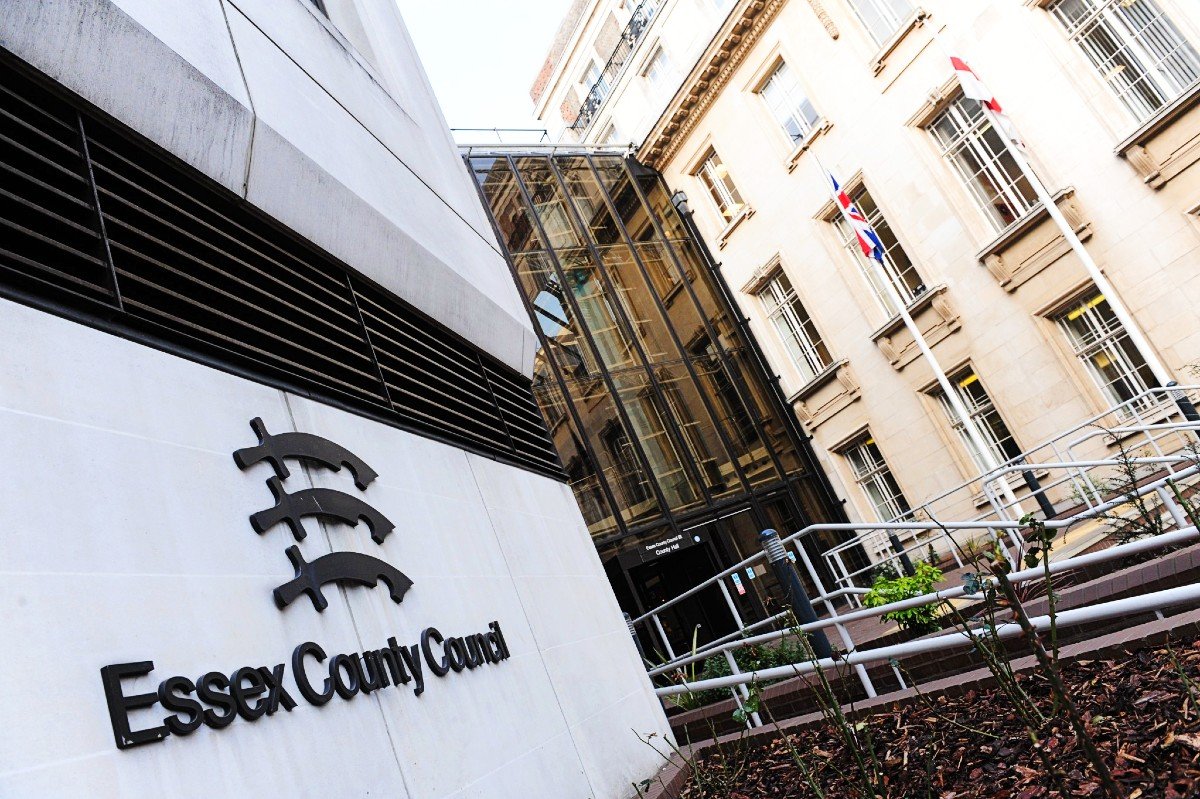
Exterior view of Essex County Hall, Chelmsford

Image by Essex County Council via Flickr (CC BY-NC-ND 2.0)

Share on Bluesky

In February the government confirmed its plans to reorganise local government across England. The current confused pattern is to be replaced with a single model across England. In every area, there will be a single unitary authority responsible for all local government services, and an elected mayor who will oversee a number of strategic issues across a wider area.

The aim is for a system which is easier to understand, more accountable, and better able to deal with strategic issues which affect wider areas. The new areas also need to make economic and cultural sense, and there is a hope that there will be savings by reducing the number of offices and staff. In September, existing councils in Norfolk, Suffolk and Essex all submitted proposals for reorganisation to the government.

Mayors coming next year

The first plank of reorganisation is the creation of two new Strategic Authorities – one for Norfolk and Suffolk, and one for ‘Greater Essex’ (including Thurrock and Southend). Each will be led by a mayor, who will have responsibilities across the area for housing, planning, transport, energy, skills and employment support. They will represent the authority at national level on the Council of Regions and Nations. 

Mayors will work with all the unitary authorities in their area, regardless of party, so the aim is to ensure that they have maximum support from the electorate. To achieve this, elections will use the Supplementary Vote system, where voters can choose a first and second preference candidate. If no candidate achieves 50% of votes, there is a runoff, where all the second preference votes are added to the totals of the top two. This ensures a higher level of support for the winner than our more familiar ‘first past the post’ electoral system.

The first mayoral elections will take place next May. The result is difficult to predict. These areas have traditionally been strongly Conservative, but the party is currently polling very badly, turnout in local elections is usually low, and there has traditionally been a strong independent presence in local government, especially in Essex where Reform is also currently polling well.

Creating unitary authorities

The second plank of devolution is the replacement of county and district councils in Norfolk, Suffolk and Essex with a single tier of unitary authorities.

The government invited all existing local authorities to submit proposals by September for the new unitary authority areas, with the aim of each having a population of around half a million. Arithmetically this would mean two unitaries each in Suffolk and Norfolk, and three in Essex, but there are real difficulties in meeting this in large and diverse counties. Boundaries have to make economic sense, and bring together people who feel some sort of common links, and they need to bring services as close as possible to the people. But the unitaries are bound to be very large, often in areas with poor or non-existent public transport. So, ministers have indicated that they will consider different sizes if there is a clear rationale.

The existing councils have commissioned expert studies, and some have undertaken public consultations, but with no consensus in any of the three counties. So, nine proposals have been submitted to ministers – three for Norfolk, two for Suffolk and four for Essex. All proposals which meet the government’s criteria will go for public consultation during November and December, and ministers will announce final decisions in March. In May 2027 there will be elections for the new councils, which will operate on a ‘shadow’ basis for a transitional year, before they become fully operational in May 2028.

Norfolk

Three proposals have been made for Norfolk. The Conservative county council has proposed a single unitary council for the whole county, effectively the current council swallowing the functions of the seven current district, borough and city councils. This would mean a unitary authority almost double the size of the government’s original proposal.

Three unitaries

By contrast, a consortium of all existing district councils, except South Norfolk, has proposed a three unitary plan, supported by seven local MPs from four parties.

Finally, South Norfolk council has proposed a two unitary model, which would combine Norwich with east and south Norfolk, and a second council for the west and north Norfolk.

Two unitaries

Suffolk

Two proposals have been made for Suffolk. Here too, the Conservative County council has proposed a very large, single unitary authority, combining the functions of the current county council and the five district and borough councils.

But those five councils have proposed a three unitary model, with central and eastern Suffolk focused on Lowestoft and Stowmarket, western Suffolk on Bury St Edmunds, and a ‘greater Ipswich area’ that incorporates south eastern Suffolk. This model is supported by six local MPs from three parties.

Essex

Greater Essex, with a population of 1.8 million, is by far the largest and most diverse county in the region. The south west is outer London commuter belt, while the north is deeply rural East Anglia, and the south east includes the Thames estuary and Southend on Sea. In simple population terms the government guidance would suggest three unitaries, and there is a proposal for this. However, that does involve bringing together some very diverse places, with long travelling distances.

Three unitaries and five unitaries

A consortium of nine of the existing councils has proposed a five unitary model, although this would mean four of the five falling well below the target population size.

The three unitary proposal creates some very long travelling distances.

And there are two rival proposals for four unitaries. Thurrock’s proposal would group coastal areas together in the east, combine outer London areas in the west and south, create a large north and central one, and a smaller, but densely populated southeast unitary.

Four unitaries (Thurrock and Rochford proposals)

By contrast, Rochford suggests a north, west, central and south.

Conveniently, there is a single website outlining all the Essex options.

The future

This is the biggest reorganisation of local government since 1974. Managing the transfer of functions, with newly elected councillors will be complex, and there will be major change for many staff. The government hopes that the result will be simpler, clearer, more accountable, and perhaps cheaper. But some will argue that until we reform the financing of local government, real change will remain some way off.


More from East Anglia Bylines

Poster at a demonstration, reading 'Make every vote count'
Democracy

At last: a serious way to rescue our failing democracy

by Stephen McNair
14 September 2025
Road sign on the verge: "Essex"
Devolution

Essex residents invited to shape future of new local government

by East Anglia Bylines
20 June 2025
Map of East of England
Devolution

What will the new local government map look like in Norfolk and Suffolk?

by Jack Abbott MP
20 March 2025
Composite image depicting local authority debt
Anglia

Local council debts in the East: a continuing challenge

by Stephen McNair
26 August 2025
A newly excavated, muddy pond area containing a shallow pool of water, showing signs of recent conservation work. The clearing is surrounded by bare, turned-up brown earth, mature green trees, and low ground vegetation. In the background to the right sits a traditional black weatherboarded barn with a red tiled roof, separated from the clearing by a wooden fence.
Environment

Seven ponds set to reveal their hidden wildlife potential

by Rebecca Turner
8 November 2026

Download the Bylines app to get our content straight to your phone!

Get the app
Tags: ConstitutionDemocracy
Previous Post

On the Reform problem, Labour faces a serious strategic dilemma

Next Post

The lesson of the lost oak: why one Suffolk man’s mission matters

Stephen McNair

Stephen McNair

Stephen McNair is a member of the EAB editorial team, living in Norfolk. Now retired, he spent most of his career working on education policy, especially learning and work, at local, national and international level. He is Emeritus Professor of Education at the University of Surrey, and previously a Director of the National Institute for Adult Continuing Education. After 'retiring' he spent five years chairing a European research committee on demographic change.

Related Posts

A newly excavated, muddy pond area containing a shallow pool of water, showing signs of recent conservation work. The clearing is surrounded by bare, turned-up brown earth, mature green trees, and low ground vegetation. In the background to the right sits a traditional black weatherboarded barn with a red tiled roof, separated from the clearing by a wooden fence.
Environment

Seven ponds set to reveal their hidden wildlife potential

by Rebecca Turner
8 November 2026
Four slightly tilted panels showing the headquarters of Essex, Cambridgeshire, Norfolk and Suffolk county councils, each identified by its council logo, against a textured grey background.
Anglia

East Anglia’s council shake-up is back on – but a year later

by East Anglia Bylines
4 November 2026
Man sitting on a bed looks into an empty wallet
Norfolk

How do you prepare for an emergency when you can’t afford the essentials?

by East Anglia Bylines
30 October 2026
Dead fish floating among dense green duckweed and debris in the River Wensum in Norwich.
Environment

Norwich’s rivers may be in their worst ever state

by East Anglia Bylines
23 October 2026
Male tufted duck swimming on calm water
Climate

Where have Hanningfield’s waterbirds gone?

by David Jobbins
18 October 2026
Next Post
Pedunculate oak in Felsham

The lesson of the lost oak: why one Suffolk man’s mission matters

SUPPORT OUR CROWDFUNDER

Tags

Activism Brexit Cartoons Christmas Climate Community Conservation Conservatives Democracy Economy Elections Environment EU Farming General Election 2024 Government Health History Housing Labour Letters Local government Net zero NHS Norwich Opinion Our place in Europe Party politics Pecksniff Politics Polling Pollution Poverty Reform UK Renewables Sewage Social care Something for the weekend Tax Trump Ukraine Voting Wealth Wildlife Women
East Anglia Bylines

We are a not-for-profit citizen journalism publication. Our aim is to publish well-written, fact-based articles and opinion pieces on subjects that are of interest to people in East Anglia and beyond.

East Anglia Bylines is a trading brand of Bylines Networks Limited which is separate to, but allied with, Byline Times.

Learn more about us

No Result
View All Result
  • About
  • Authors and editors
  • Complaints
  • Contact
  • Donate
  • Letters
  • Privacy
  • Network Map
  • Network RSS Feeds
  • Submission Guidelines
  • Download the Bylines Network App

© 2021-2026 East Anglia Bylines. Powerful Citizen Journalism. ISSN 3049-9771

No Result
View All Result
  • HOME
  • News
    • Brexit
    • Health
    • Education
    • World
  • Politics
    • Local government
    • Justice
    • Activism
  • Climate
    • Environment
  • Lifestyle
    • Community
    • Culture
    • History
    • Humour
    • Property
  • Business
    • Development
    • Economics
    • Finance
    • Transport
    • Farming
  • ANGLIA
    • Bedfordshire
    • Cambridgeshire
    • Essex
    • Hertfordshire
    • Norfolk
    • Suffolk
  • Series

Newsletter sign up

Crowdfunder

© 2021-2026 East Anglia Bylines. Powerful Citizen Journalism. ISSN 3049-9771
