North Walsham is one of the largest towns in Norfolk and it is set to nearly double in size over the next ten years. But people living in the market town say water services are already being pushed to the brink, with the town plagued by sinkholes, leaks and overburdened sewage systems in recent years.
Despite repeated roadworks and emergency repairs, new problems keep emerging. Roads across the town are frequently closed, with fresh sinkholes reported on Cromer Road, Norwich Road, Marshgate and others. In Hall Lane, a sinkhole has led to partial closure of the road.
Crisis meeting reveals growing alarm
At North Norfolk District Council’s overview and scrutiny committee on 11 June, representatives from Anglian Water were pressed about what councillors called a “failing system” in the face of a fast-growing population.
Mal Gray, a North Walsham town councillor, said temporary patchwork fixes were no longer enough. “We are seeing short-term repairs being made, but the wider network clearly needs serious investment. This cannot continue indefinitely.”


Councillor Paul Heinrich warned that North Walsham’s population is expected to reach 20,000 in the next 15 years. “Water supply is already intermittent. The infrastructure is leaking in the streets. Where is the investment?”
In response, Anglian Water’s engagement manager Grant Tufts described water security in the region as one of the company’s “biggest challenges”. He pointed out that East Anglia receives the lowest rainfall in the UK and has among the fastest housing growth. “We are planning ahead,” he said, “but if the housing numbers change around us, through government initiatives, then we have to play catch-up.”
This answer left many councillors unconvinced. Heinrich asked bluntly: “Are you saying we just have to hope for the best?”
Climate pressures meet creaking infrastructure
Anglian Water insists it has one of the best records for fixing leaks in the country. But campaigners and councillors argue that fixing leaks after they happen is no substitute for investing in infrastructure that can prevent them in the first place – especially in one of the driest parts of the UK. The region is classified as “seriously water-stressed” by the Environment Agency, meaning water resources are under pressure and may not be sufficient to meet future demands.
Yet each year, Anglian Water loses an estimated 183 million litres of water per day to leaks. That’s enough to supply over a million people – equivalent to nearly the entire population of Norfolk.
And yet North Norfolk is expected to absorb thousands more homes under government housing targets. The council’s own plan includes more than 9,500 new homes across the district over the next 15 years – over 2,400 in North Walsham itself. It raises fundamental questions about how this growth will be supported when the basics – drinking water and sewage – are already under considerable strain.
Felmingham: sewage trucks and overflows

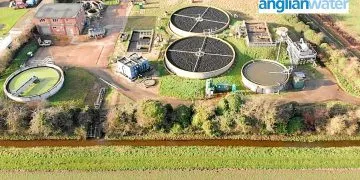
In the neighbouring village of Felmingham, just two miles west of North Walsham, residents have endured repeated overflows from a pumping station that is unable to cope with current demand – even before planned developments nearby.
Peter Neatherway, a local councillor, said sewage trucks are constantly called in to remove waste manually from the overloaded system. “It is constantly overflowing. We are looking at 50 new houses being built, but the treatment centre can’t cope already.”
Tufts apologised for Anglian Water’s disruption and said the problem stemmed from “infiltration and surface water entering the system”. The company is considering long-term solutions, he said, but did not confirm a timeline.
Looming consequences, but who is accountable?
These issues aren’t unique to North Walsham or Felmingham. Across East Anglia, water and sewage systems are struggling under the combined pressure of climate change, decades of underinvestment and the fastest growing population in the country, according to the last census.
Campaigners argue that private water companies – including Anglian Water, which made £80m in profits last year (and paid £80 million in dividends), have prioritised shareholder returns over essential infrastructure upgrades. And despite recent fines and increased scrutiny, critics say Ofwat and government ministers have failed to compel meaningful investment in leak prevention, sewage spillage or new capacity.
In theory, water companies can be penalised for failing to deliver adequate services. But in practice, the cost of inaction is often borne by the public, through sinkholes, road closures, sewage overflows and rationed growth. For towns like North Walsham, set to double in size while already running on the edge, the bigger question is becoming urgent: how much more strain can the system take?