• Contact
  • About
  • ISSN 3049-9771
  • Authors and editors
NEWSLETTER SIGN UP
East Anglia Bylines
Advertisement
  • HOME
  • News
    • Brexit
    • Health
    • Education
    • World
  • Politics
    • Local government
    • Justice
    • Activism
  • Climate
    • Environment
  • Lifestyle
    • Community
    • Culture
    • History
    • Humour
    • Property
  • Business
    • Development
    • Economics
    • Finance
    • Transport
    • Farming
  • ANGLIA
    • Bedfordshire
    • Cambridgeshire
    • Essex
    • Hertfordshire
    • Norfolk
    • Suffolk
  • Series
No Result
View All Result
East Anglia Bylines
Home Environment Climate

Five ways to inspire ocean connection: reflections from my 40-year marine ecology career

Five lessons from 40 years as a marine ecologist: why hope, action and connection still matter

Prof Martin Attrill by Prof Martin Attrill
8 June 2025
in Climate, Education, Environment, Science
Reading Time: 9 mins read
A A
A family walking along a beach at sunset

Image by Ray Bilcliff via Pexels (CC0)

Share on Bluesky

For 40 years, I’ve worked as a marine ecologist and, since 1992, I’ve been based in Plymouth, Devon – a global hub for coastal marine research and teaching. As I think back to how our understanding of life in our oceans has changed over that time, here are five lessons I have learnt.

1. Start with the basics

Back in the 1970s, the band America wrote: “The ocean is a desert with its life underground, and the perfect disguise above”. Many people I speak to actually don’t see much beyond that grey-blue surface.

Back in 2014 my colleagues and I were quite shocked at the response to a big survey we did on public perception of the marine environment in the UK, particularly when we break out of our marine bubbles. If an organism was remotely colourful or interesting, most people assumed it didn’t live in UK waters.

That reminded me not to underestimate how little most people know, or care, about UK seas. Make no assumptions.

While Blue Planet and other beautiful TV series have undoubtedly helped raise the profile of the world’s seas, some have potentially reinforced this view of local waters – that you have to travel to far-off exotic locations to find any interesting and spectacular life.

2. Inspire deep connection

Research shows the almost unparalleled restorative power of being in, on, under or by the sea. You do not need to dive to feel a strong ocean connection – building sandcastles, catching crabs on a line in a harbour, skimming stones or letting the cold water wash over your feet can work wonders.

Rockpooling is also an incredible window into the underwater world – suddenly all this weird and wonderful life opens up to us in a small, simple and accessible puddle.

Children playing in a rock pool
Image by Ilze Ļihačova via Pexels (CC0)

People need to be given more opportunities to form lasting connections with the ocean. Organisations such as Plymouth’s Ocean Conservation Trust and Devon Wildlife Trust are bringing young people to the sea, sometimes for the first time.

Enabling ocean connection is just as important for people who don’t have the chance or ability to physically be there, for example through virtual reality. I’ve also been involved in transforming Plymouth Sound into the UK’s first national marine park – this concept is all about engaging people with this stretch of coastline, getting them connected to the ocean and inspiring them to care. And the marine park model could be replicated around the UK.

3. Take the pressure off

If you leave the ocean alone, it can recover. Very few shallow areas of our global ocean remain untouched. But, as demonstrated so well in David Attenborough’s latest film, Ocean, if you remove all the most damaging impacts (particularly physical fishing damage), then the sea has great powers of recovery.

In the UK, bluefin tuna and humpback whales have returned as the pressure to hunt them has been better managed. The cold water reefs on the seabed in Lyme Bay off the south coast of England have recovered remarkably just four years after a ban on towed fishing gear was introduced.

What is seagrass? The Ocean Conservation Trust explains.

Today, there are so few properly protected areas where all damaging or extractive activities are completely removed to give nature a chance, particularly in the UK. Some habitats may need a bit of help from us – active restoration or replanting of seagrass beds and oyster reefs will help kickstart regrowth.

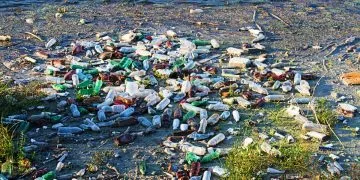
4. Plastic is a distraction

The flow of plastics into the ocean must certainly be stopped. But I worry that the plastic pollution problem is a bandwagon that so many businesses, media outlets and governments have jumped on. Has a decade-long focus on “solving” the plastic crisis been a troublesome distraction? Banning single-use straws can seem like an easy win because leaders can be seen to be taking action – but it does little to solve the ocean’s biggest problems.

A heap of waste plastic retrieved from the ocean. Much of it is discarded fishing nets.
Photo credit: The Ocean Cleaup. Used with permission

Meanwhile, the most complex and hard to resolve activities that seriously harm our seas, such as industrial overfishing, are still not being dealt with. The most damaging fishing practices such as trawling and dredging continue legally, astonishingly even within designated marine protected areas. Such highly damaging activities have no place near sensitive habitats and this has been so well demonstrated in Ocean.

The recent UK ban on sandeel fishing gives me hope. This landmark decision was made to benefit nature (protecting food supply for seabirds), restricting a fishery that does not even supply food for humans. Sandeels are used to make fishmeal and fish oil to feed farmed fish and livestock.

Yet, damaging fishing practices such as trawling and dredging continue legally, even within designated marine protected areas. Such highly damaging activities have no place near sensitive habitats.

I firmly believe that the most effective and straightforward solution for the UK is to prohibit all towed fishing gear from within at least three miles of the coast – including developing a series of fully protected marine reserves.

In Lyme Bay, this approach has led to a real win-win because the seas are now recovering, and local fishers, holidaymakers and coastal communities are benefiting too.

5. Add a dose of ocean optimism

Rising eco-anxiety, particularly in younger people, is not surprising given the state of the world. Faced with the nature and climate crisis, it is easy to feel utter despair.

Climate change will undoubtedly change our planet. Yet, without oceans absorbing most of the carbon (while producing half the oxygen we breathe), this planet would already be uninhabitable for human civilisation. Making our oceans as healthy and resilient as possible is therefore crucial.

Right now, we need some ocean optimism. Sharing the stories of progress and innovation that show how patches of the sea are recovering can demonstrate what’s possible and inspire further positive action. By showcasing areas now rich with diverse marine life now that industrial-scale damage has been stopped or whale populations that are booming now that harpoons are a thing of the past, a vision for a better, bluer future can become reality at scale.

Listen to episode one of Secrets of the Sea here on BBC Sounds, presented by Anna Turns for The Conversation.

The Conversation

This article is republished from The Conversation under a Creative Commons license. Read the original article.

More from East Anglia Bylines

growing seagrass
Environment

Marine heatwave and sewage threaten life in our waters

by Richard Unsworth
21 June 2023
Plastic bottle pollution in a river
Environment

This simple solution stops pollution going into the sea

by Amaya Edwards
9 February 2025
A marine tidal generator
Energy

Tidal power: a key element in our future energy mix

by Stephen McNair
24 October 2024
A heap of waste plastic retrieved from the ocean. Much of it is discarded fishing nets.
Environment

Plastic: what to do with it

by Kate Moore
5 June 2023

Infographics from Easyfundraising

We are registered with easyfundraising! 8,000 brands will donate to us for free every time you use it.

It’s super quick and easy to SIGN UP, and will never cost you anything whatsoever. It’s FREE for you and HUGE for us!

Previous Post

World Oceans Day: save the jellyfish!

Next Post

Council pleads for truce in new ‘campaign of hate’ by local people

Prof Martin Attrill

Prof Martin Attrill

Prof. Martin Attrill is a marine ecologist whose primary research interest is focused on the mechanisms behind long-term change and large-scale spatial patterns in marine assemblages and populations. He has been working with long-term data from marine fish and invertebrate populations within a range of habitats such as the Thames Estuary, Brazilian coral reefs and the open Atlantic Ocean, including investigating the role of climate variation on fish, corals and plankton. He has published over 150 papers in the prime literature, primarily on fish and benthic systems such as seagrass, but in recent years has been mainly involved in projects investigating the roles of Marine Protected Areas, within the UK and abroad, assessing their ecological and socioeconomic value and their interaction with fishing. The main study has been the UK Defra designation in Lyme Bay which his team has been monitoring since 2008 and formed a novel research partnership with the Blue Marine Foundation and local fishermen to undertake research into sustainable fishing within MPAs. He is also interested in the human impacts of large scale offshore renewable energy developments and how we can effectively and suitably monitor their interaction with the environment.

Related Posts

Solar panels raised above crops at an agrivoltaics pilot farm in Heggelbach, Germany, allowing the land beneath to remain in agricultural use.
Climate

Letter: Why aren’t we considering agrivoltaics?

by East Anglia Bylines
1 October 2026
Photo of a Norfolk river
Development

New plans for Norfolk’s rivers. Will they work?

by East Anglia Bylines
1 October 2026
A canal boat on a large fen waterway with wind turbines in the distance and green fields to the side.
Cambridgeshire

Britain’s most artificial landscape may not survive climate change

by East Anglia Bylines
18 September 2026
Solar farm near Wroxham
Development

Are solar farms really stealing the food from our mouths?

by Stephen McNair
18 September 2026
A view of heathland under a blue sky with a signpost pointing the way to Ivanhow Beacon on the Icknield Way . There is also a National Trust stone indicator.
Anglia

Walking the Icknield Way: a glorious eight-day summer adventure

by Sarah Pryor
16 September 2026
Next Post
Main image shows blurred council meeting with words: "Council vs Townsfolk"

Council pleads for truce in new 'campaign of hate' by local people

SUPPORT OUR CROWDFUNDER

Tags

Activism Art Brexit Cartoons Christmas Climate Community Conservation Conservatives Democracy Economy Elections Environment EU Farming General Election 2024 Government Health History Housing Labour Letters Local government Net zero NHS Norwich Opinion Our place in Europe Party politics Pecksniff Politics Polling Pollution Poverty Reform UK Renewables Sewage Social care Something for the weekend Tax Ukraine Voting Wealth Wildlife Women
East Anglia Bylines

We are a not-for-profit citizen journalism publication. Our aim is to publish well-written, fact-based articles and opinion pieces on subjects that are of interest to people in East Anglia and beyond.

East Anglia Bylines is a trading brand of Bylines Networks Limited which is separate to, but allied with, Byline Times.

Learn more about us

No Result
View All Result
  • About
  • Authors and editors
  • Complaints
  • Contact
  • Donate
  • Letters
  • Privacy
  • Network Map
  • Network RSS Feeds
  • Submission Guidelines
  • Download the Bylines Network App

© 2021-2026 East Anglia Bylines. Powerful Citizen Journalism. ISSN 3049-9771

No Result
View All Result
  • HOME
  • News
    • Brexit
    • Health
    • Education
    • World
  • Politics
    • Local government
    • Justice
    • Activism
  • Climate
    • Environment
  • Lifestyle
    • Community
    • Culture
    • History
    • Humour
    • Property
  • Business
    • Development
    • Economics
    • Finance
    • Transport
    • Farming
  • ANGLIA
    • Bedfordshire
    • Cambridgeshire
    • Essex
    • Hertfordshire
    • Norfolk
    • Suffolk
  • Series

Newsletter sign up

Crowdfunder

© 2021-2026 East Anglia Bylines. Powerful Citizen Journalism. ISSN 3049-9771

