
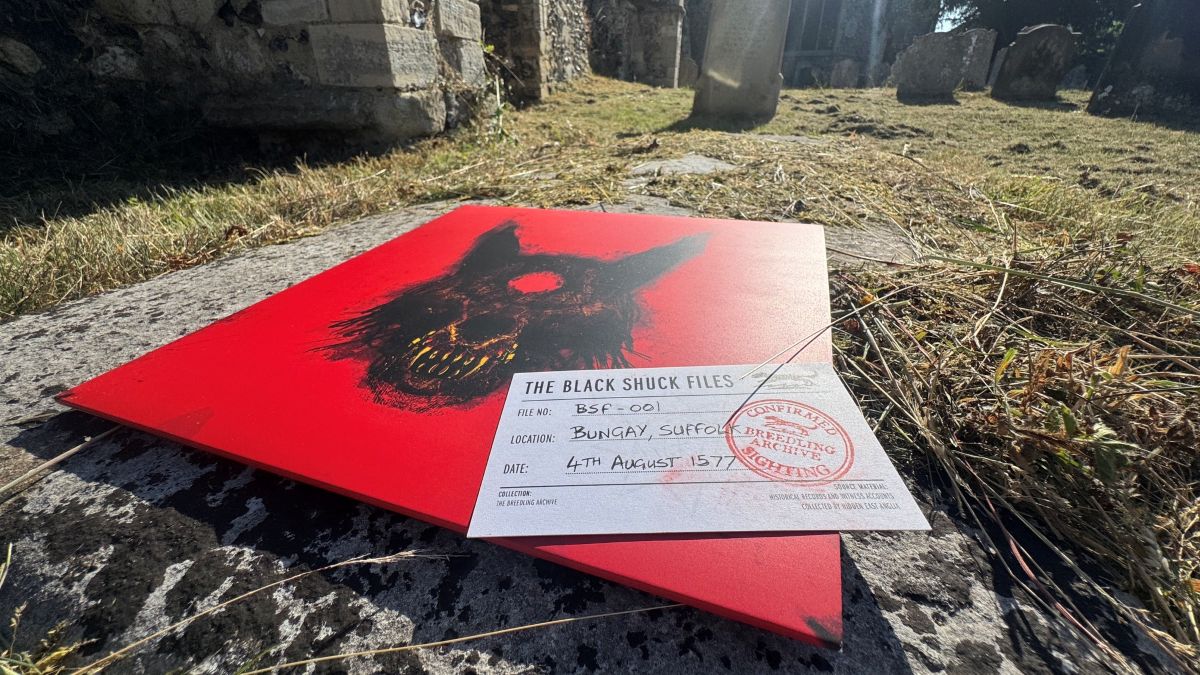
The Black Shuck myth was born in England in 1127. More recently the beast was said to appear in Bungay in 1577. Chris Spalton’s music and designs typify the fear that the beast still provokes. And so once again the enduring myth of the wild black dog returns to Bungay and will be celebrated at Bungay Black Shuck festival.
A Straunge And Terrible Wunder is the third album from The Breedling (aka Spalton), “inspired by the folklore legend of the giant hellhound Black Shuck and the aftermath of the infamous East Anglian cryptid’s first recorded appearance in August 1577.” Many believe the beast, shaggy in appearance with shinning eyes and slavering lips still patrols our lanes. And Spalton’s music may, indeed, represent its sound.
The Bungay apparition was described by the Cambridge historian, Abraham Fleming, in A straunge and terrible wunder. The story is further narrated in Highways and Byways in East Anglia by William Alfred Dutt.
The Bungay festival
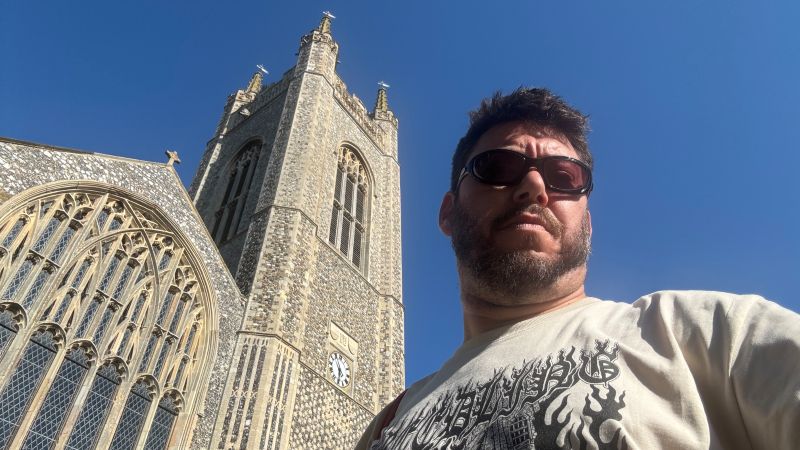
The Bungay Black Shuck festival runs from 31July until the 2 August and will demonstrate that fascination with this intriguing myth endures. The festival celebrates the beast by holding art exhibitions, and numerous other events for all ages, including a parade consisting of “costumed characters depicting all of “our local legends, Tudors, Fire Sprites and of course Black Shuck himself”.
Talks about East Anglian folklore, storytelling events, can be enjoyed and you can attend the launch of Spalton’s work, together with Fenland Drone at the Three Tun’s Cellar on 1 August from 6-9 pm.
A beast of terror
According to legend Black Shuck entered Bungay church in 1577 and then made its way to Blythburgh church where it was imprisoned, and its claw marks can still be seen on the church’s doors today. Two people were alleged to have been killed by the dog in Bungay before it travelled the 12 miles to Blythburgh, where a further two people are said to have lost their lives. The Norfolk visual artist and writer, Nick Stone, has written about the subject of black dogs and mythology in his Invisible Works series, where he has discovered that stories about this restless canine are narrated across the world and not simply the UK. Lincolnshire calls the mutt the hairy beast, in Germany the ghostly hound is known as the Roggenwolf.

Bad weather
Much of the Suffolk tale appears to be accompanied by bad weather. 1577 was the year of the ‘great comet,’ and the Bungay Shuck appearance coincided with horrendous thunderstorms. The steeple of Blythburgh church collapsed, due to a lightning strike. Perhaps this is the reason behind the marks on the door – not Shuck’s claws.
This tale also may have been due to the English reformation – a turbulent period of English history. Good old-fashioned propaganda was put out by the catholic church, citing the work of the devil in a bid to retain Catholicism across the UK, not forgetting the infamous witch hunts that took place throughout East Anglia.
Many tales of mysterious hounds
It was the 1127 fenland apparition recorded in the Peterborough Chronicle where the word ‘shuck’ is first employed, taken from the Old English for devil, ‘succa.’ Apparently the arrival of the new abbot, Henry of Poitou, set the wheels in motion for the appearance of mysterious huntsmen riding their black hounds and wreaking havoc in the area from the start of Lent until Easter.
The Bungay apparition was described by the 16th-century Cambridge historian, Abraham Fleming, in A Straunge and Terrible Wunder, and the story is further narrated in Highways and Byways in East Anglia by William Alfred Dutt.
Black Shuck today

Whatever the truth behinds these tales, or even if there is a truth, the story of Black Shuck still intrigues and fascinates. The Norfolk author, Chris Spalton, has made a video about the subject and even the Suffolk band, the Darkness, wrote a song devoted to Black Shuck.
The Bungay festival is on from 31 July – 2 August and events will be held throughout the town. The organisers describe the celebration as a “A unique festival that celebrates folklore, imagination, and storytelling in its many forms.”
For the full programme and ticket information – some events are free – please visit www.blackshuckfestival.com.
More from East Anglia Bylines



Subscribe to our newsletters
Each of our Bylines sends a newsletter every month and we also send out a ‘Best of Bylines, featuring a selection of the best articles from across the network